7 Best Juicers for Whole Fruits and Vegetables (November 2026)
The best juicers for whole fruits and vegetables include the EanOruus 3-in-1 Cold Press Juicer for regular batch prep, the Canoly C16 3-in-1 Juicer for dishwasher households, and the TUUMIIST 3-in-1 Juicer for mixed recipe routines.
On this page (7 sections)
- Which juicer for whole fruits and vegetables fits your routine?
- Best juicers for whole fruits and vegetables
- What should you check before buying a whole-fruit juicer?
- How do you set up and use a whole-fruit juicer?
- How can you keep cleanup manageable after every batch?
- Which common mistakes cancel out the convenience of a wide chute?
- Which whole-fruit juicer should you choose?
The EanOruus 3-in-1 Cold Press Juicer is our pick for the best juicer for whole fruits and vegetables because its roomy chute and large hopper suit regular batch prep. Choose Canoly if dishwasher-safe care matters most, or SMALLHOO if you need the most loading room.
A whole-fruit juicer should save you chopping without creating a washing routine you'll avoid. The right choice depends on what you juice, how many servings you make and where the machine will live.
Whole fruit still needs preparation. Wash ingredients, remove hard pits and follow the machine's directions for peels, cores and fibrous stalks, even when the entire ingredient fits through the opening.
For a broader look at slow juicer designs, see our cold press juicer buying guide. If your recipes lean heavily on greens, our guide to cold press juicers for leafy greens explains why feeding technique matters alongside chute size.
Our picks at a glance
-
1

-
2

-
3
- 4
 Best for small kitchensCheck it
- 5
 Check it
AMZCHEF 6-Inch Self-Feeding Juicer
Best for low cabinet clearance - 6
 Best for larger family batchesCheck it
- 7
 Check it
AAOBOSI 3-in-1 6.5-Inch Juicer
Best for family breakfast routines
Which juicer for whole fruits and vegetables fits your routine?
EanOruus is the strongest fit for regular batch prep, while Canoly, TUUMIIST and Godspeeds address different daily needs. Start with the task you want to make easier, then use the comparison below to check the trade-offs.
Chute width affects how much cutting you can avoid. Hopper space affects how often you reload, while the appliance's outside dimensions determine whether it can stay in a useful spot.
These scores reflect whole-produce convenience, functions and care requirements. A lower-ranked model can still be your better choice when it solves a specific space or cleanup problem.
Don't choose by motor wattage alone. That number doesn't tell you which machine will produce more juice from your recipe, clear fibrous ingredients more easily or finish washing sooner.
| Product | Best for | Feed chute | Hopper capacity | Functions | Our score |
|---|---|---|---|---|---|
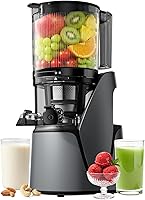
| EanOruus 3-in-1 Cold Press Juicer | regular batch prep | 6.5 in | 100 oz | Juice, sorbet and nut milk | 9.1 |
| Canoly C16 3-in-1 Juicer | dishwasher households | 6 in | 90 oz | Juice, sorbet and nut milk | 8.4 |
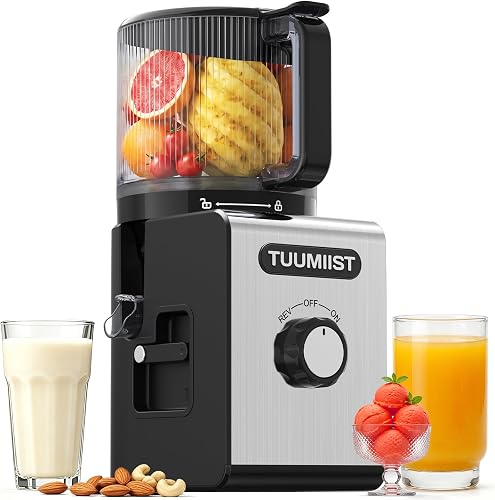
| TUUMIIST 3-in-1 Juicer, 6.5-Inch | mixed recipe routines | 6.5 in | 100 oz | Juice, nut milk and sorbet | 8.2 |
| Godspeeds Smoothpress 6-Inch | small kitchens | 6 in | Juice | 8.1 | |
| AMZCHEF 6-Inch Self-Feeding Juicer | low cabinet clearance | 6 in | Juice, nut milk and sorbet | 7.9 | |
| SMALLHOO 3-in-1 7-Inch Juicer | larger family batches | 7 in | 120 oz | Juice, nut milk and sorbet | 7.8 |
| AAOBOSI 3-in-1 6.5-Inch Juicer | family breakfast routines | 6.5 in | 100 oz | Juice, nut milk and sorbet | 7.7 |
Best juicers for whole fruits and vegetables
Choose by your daily routine, then check the space and care trade-offs. The products below remain in score order, with a clear reason to choose or skip each one.
EanOruus 3-in-1 Cold Press Juicer: Best for regular batch prep
- 6.5-inch feed chute
- 100-ounce hopper
- Juice and sorbet strainers
- Makes nut milk
Choose EanOruus for regular family batches and access to the pulp outlet during cleanup. Its large hopper suits loading several ingredients together.
Pros
- Roomy chute for whole produce
- Large hopper for batch prep
- Detachable pulp outlet
Cons
- Hand wash only
- Sorbet requires a strainer change
EanOruus is the best starting point for households that prepare several servings together. Its 6.5-inch chute and 100-ounce hopper give apples, oranges and mixed vegetables plenty of loading room, provided each ingredient fits and is prepared correctly.
The separate juice and sorbet strainers suit buyers who will use both functions, and the machine also supports nut milk. Keep the extra strainer in a dry, accessible spot so changing recipes doesn't become a search through a drawer.
Its detachable pulp outlet is useful because cleanup includes the pulp path as well as the juice filter. Remove trapped fibers before they dry, then wash the detachable parts by hand.
At 13.7 x 7.48 x 17.4 inches, in depth, width and height, this is a tall machine with a fairly deep body. Measure the work area in front of it for containers and behind it for comfortable placement.
Choose EanOruus for a regular family routine with planned cleanup time. Skip it if dishwasher care is essential or you mainly want a small appliance for an occasional glass.
Canoly C16 3-in-1 Juicer: Best for dishwasher households
- 6-inch feed chute
- 90-ounce hopper
- Dishwasher-safe care
- Juice and sorbet strainers
Canoly suits buyers who want dishwasher-safe care and a narrow appliance body. Its detachable pulp outlet also provides access for clearing trapped residue.
Pros
- Dishwasher-safe care instructions
- Detachable pulp outlet
- Narrow body for counter placement
Cons
- Less loading room than the largest picks
- Sorbet requires a separate strainer
Canoly is the better fit if washing parts is the main reason you put off juicing. Its dishwasher-safe care instructions and detachable pulp outlet address that concern, though pulp still needs clearing before it dries into narrow spaces.
The 6-inch chute and 90-ounce hopper suit loading several ingredients together without choosing the largest machine in the group. Whole apples and pears can fit, but oversized fruit should be cut rather than pressed into the opening.
It supports juice, nut milk and sorbet, with separate juice and sorbet strainers. Those functions make sense for a household that will actually use them, rather than store the extra pieces indefinitely.
Its body measures 9.45 x 6.89 x 17.32 inches, in depth, width and height. The narrow width helps beside other appliances, but you still need room above it to load and remove parts.
Choose Canoly when dishwasher use is part of your normal kitchen routine. Skip it if your main goal is maximum hopper space, and follow the manual for approved parts and dishwasher placement.
TUUMIIST 3-in-1 Juicer, 6.5-Inch: Best for mixed recipe routines
- 6.5-inch feed chute
- 100-ounce hopper
- One strainer for juice, nut milk and sorbet
- Quick-release parts
TUUMIIST suits households that want juice, nut milk and sorbet without keeping track of separate strainers. Allow enough counter width for its broad body.
Pros
- One strainer for three uses
- Quick-release parts
- Cleaning brush included
Cons
- 13-inch width needs counter space
- Conflicting dishwasher and hand-wash guidance
TUUMIIST suits buyers who want to switch between juice, nut milk and sorbet without changing strainers. Its one-strainer design reduces the number of separate recipe parts you need to identify, store and retrieve.
That doesn't remove the need to clean between recipes. Wash thoroughly before changing from nuts to fruit, especially when someone in the household needs to avoid nuts.
The 6.5-inch chute and 100-ounce hopper provide batch-loading room similar to EanOruus. Recommended ingredients include apples, carrots, celery, kale and ginger, making it relevant to mixed fruit-and-vegetable recipes.
The body measures 7 x 13 x 17 inches, in depth, width and height, so check its width carefully. A shallow counter can accommodate its depth while still lacking enough clear space across.
Quick-release parts and an included brush support routine cleaning, but the washing guidance includes both dishwasher and hand-wash directions. Hand wash unless the manual clearly identifies dishwasher-safe parts.
Choose TUUMIIST for frequent recipe changes and fewer separate strainers. Skip it if counter width is tight or you want clear dishwasher guidance before buying.
Godspeeds Smoothpress 6-Inch: Best for small kitchens
- 6-inch feed chute
- 6 x 6-inch footprint
- 300-watt motor
- Dishwasher-safe care
Choose Godspeeds when counter depth and width limit your options. Its juice-focused design suits buyers who don't need nut milk or sorbet functions.
Pros
- Small appliance footprint
- Detachable toothed filter
- Reverse function
Cons
- Needs overhead loading clearance
- Choose another model for nut milk or sorbet
Godspeeds is the most useful option here for a small kitchen focused on juice. Its 6 x 6-inch footprint takes less counter depth and width than the other picks, leaving more space for produce preparation.
The 6-inch chute accepts suitable whole apples, oranges and cucumbers. Keep in mind that the space saved by the base doesn't include the containers, ingredients and working room you need during use.
A detachable toothed filter provides access for rinsing away pulp, and the care instructions allow dishwasher use. Check the filter before putting it away so fibers don't remain caught between its surfaces.
The reverse function gives you a way to respond to a jam according to the manual. It doesn't make forcing an oversized ingredient through the opening a good idea.
Choose Godspeeds if you want juice and need to protect counter space. Skip it if nut milk or sorbet is part of your plan, and allow overhead loading room beyond its 16-inch assembled height.
AMZCHEF 6-Inch Self-Feeding Juicer: Best for low cabinet clearance
- 6-inch reversible chute with built-in cutting blades
- Juice and sorbet filters
- Makes nut milk
- Detachable juicing body
AMZCHEF is the shortest machine here and has built-in cutting blades to reduce chopping. Measure loading and removal space as well as the assembled height.
Pros
- Shortest assembled height in this group
- Built-in cutting blades
- Detachable juicing body
Cons
- Hand washing is recommended
- Sorbet requires a separate filter
AMZCHEF is worth choosing when assembled height is your main constraint. At 8.9 x 7.7 x 13.3 inches, in depth, width and height, it's the shortest machine in this group.
Its 6-inch reversible chute has built-in cutting blades to reduce chopping before feeding. You still need to prepare produce safely, and the blades aren't a reason to include hard pits or force in a tightly wedged ingredient.
The machine supports juice, nut milk and sorbet, with separate juice and sorbet filters. Its 90-ounce hopper also gives a household room to load ingredients for more than a small single-serving recipe.
The detachable juicing body comes apart for cleaning, with hand washing recommended. AMZCHEF directs you to keep the lid open when assembling or removing the chute, so make that step part of your setup routine.
Choose it for lower assembled height and help cutting larger produce. Skip it if you need dishwasher care, and measure the extra room needed to open, load and dismantle it beneath a cabinet.
SMALLHOO 3-in-1 7-Inch Juicer: Best for larger family batches
- 7-inch chute
- 120-ounce hopper
- Juice, nut milk and sorbet
- Tool-free disassembly
SMALLHOO offers the most loading room in this group for households making larger batches. Plan on hand washing because its care instructions conflict.
Pros
- Widest chute in this group
- Largest hopper here
- Tool-free disassembly
Cons
- Conflicting dishwasher and hand-wash guidance
- Recipe preparation still required for nuts and frozen fruit
SMALLHOO suits households that regularly prepare larger family batches. Its 7-inch chute and 120-ounce hopper are the largest in this group, giving you more room before another loading stop.
That advantage matters most when your normal recipe fills a smaller hopper. For one glass at a time, the extra loading capacity offers less benefit than an easy setup and manageable washing routine.
It supports juice, nut milk and sorbet, but those recipes require different preparation. SMALLHOO calls for soaking nuts for 3–4 hours and briefly thawing frozen fruit for 3–5 minutes before sorbet preparation.
The machine comes apart without tools. Its care guidance conflicts on dishwasher use, so plan to hand wash unless the manual clearly approves specific parts.
Its body measures 13 x 7.5 x 17 inches, in depth, width and height. Check that depth against the space you can leave available between uses.
Choose SMALLHOO when loading capacity is the deciding factor. Skip it if you want unambiguous dishwasher care or rarely make enough juice to use the larger hopper.
AAOBOSI 3-in-1 6.5-Inch Juicer: Best for family breakfast routines
- 6.5-inch feed chute
- 100-ounce hopper
- Juice, nut milk and sorbet
- Detachable parts
AAOBOSI suits adults preparing several breakfast servings who accept a hand-wash routine. Check which accessories come with the machine before choosing it for all three functions.
Pros
- Roomy hopper for several servings
- Detachable parts
- Supports juice, nut milk and sorbet
Cons
- Hand wash only
- Included accessories need confirmation
AAOBOSI suits adults making several servings for a family breakfast and accepting a hand-wash routine. Its 6.5-inch chute and 100-ounce hopper provide room for mixed produce without frequent small reloads.
The machine supports juice, nut milk and sorbet. If all three uses matter to you, confirm which filters, tools and containers come with it before ordering, since the included-accessory information is limited.
Its body measures 8.94 x 8.07 x 16.22 inches, in depth, width and height. That makes it narrower than TUUMIIST, though Canoly offers a narrower body if width is the main constraint.
Detachable parts let you reach food-contact surfaces during washing. Rinse them soon after use rather than leaving a full breakfast's pulp to dry while you get ready for the day.
AAOBOSI specifies that this model isn't suitable for children under 12. Keep operation with an adult rather than treating the wide opening as a child-friendly feeding station.
Choose it when its dimensions fit your kitchen. Skip it if you need dishwasher care or a clearly documented accessory bundle.
For vegetable-heavy recipes, see our guide to juicing carrots and beets.
What should you check before buying a whole-fruit juicer?
Match the machine to your usual produce, serving size and washing routine. The widest opening is useful only if the rest of the appliance fits how you cook and clean.
How wide should the best whole-fruit and vegetable juicer be?
Choose an opening that accepts your regular ingredients without squeezing or forcing them. These picks range from 6 to 7 inches, but fruit shape matters as much as its widest point.
A round apple and a long, curved cucumber won't settle into the same space in the same way. Cutting an awkward ingredient once can be easier than stopping the machine to deal with poor feeding.
Don't plan your entire routine around the largest fruit you might buy. If most of your ingredients fit comfortably, an occasional cut is a reasonable trade for better storage or easier care.
How much hopper capacity do you need?
Buy enough hopper space for your normal recipe, rather than the largest number available. A hopper holds ingredients; its stated capacity isn't a promise of that much finished juice.
Leafy greens, firm roots and juicy fruit pack differently and produce different amounts of liquid. Don't use hopper ounces to calculate exact servings or the size of your juice container.
Also distinguish hopper capacity from cup capacity when comparing machines. If you make a larger batch, watch both the juice and pulp containers and empty them before they overflow.
Does a wide chute work well with carrots and celery?
A wide chute helps with loading, but fibrous produce still needs controlled feeding. Cut long stalks as the manual directs and avoid packing a dense bundle into the chamber.
Alternate small amounts of leafy or stringy ingredients with firmer, juicy produce when your manual allows it. That gives the machine a varied feed instead of a large mass of fibers at once.
For ingredient-specific advice, read about juicing carrots and beets and putting celery in a juicer. Choose based on your everyday recipe, especially if vegetables will make up most of each batch.
Which dimensions matter beyond the base?
Measure loading, container and removal space, as well as the appliance body. A machine that fits beneath a cabinet when closed may need to slide forward before you can fill or dismantle it.
Mark its depth and width on the counter, then leave room for the juice cup, pulp container and washed ingredients. Check that you can reach the controls without leaning across the feed opening.
If you'll store it in a cupboard, think about lifting it out with dry hands and carrying the parts separately. A convenient permanent spot can matter more than a slightly larger hopper.
What cleanup details matter most?
Prioritize access to the filter, pulp outlet, seals and chamber. Dishwasher-safe care helps only if the approved parts fit your normal dishwasher routine.
Hand washing may be quicker than waiting for a full dishwasher cycle, especially when you want to use the machine again soon. If washing is your main buying concern, compare our easy-to-clean juicer picks.
How do you set up and use a whole-fruit juicer?
Prepare the machine, containers and ingredients before starting the motor. A short, repeatable setup routine prevents interruptions once wet pulp and juice are moving through the machine.
Assemble the machine on a clear counter
Before first use, wash removable food-contact parts as the manual directs and let them dry. Place the base on a stable surface, then fit the auger, filter, chamber and lid in the correct order.
Check that locks and seals sit correctly rather than forcing parts together. Put the juice and pulp containers under their outlets before adding produce.
Use the attachment meant for your recipe. A juice filter and a sorbet filter serve different jobs, even when both fit the same machine.
Prepare produce for processing, not just for fit
Wash produce and remove spoiled sections before loading. Remove hard pits, and follow the manual for seeds, cores, thick rinds and peels that can affect flavor or processing.
A large opening doesn't make every part edible or suitable. Prepare citrus and other strongly flavored peels according to the recipe and machine instructions.
Keep nuts and frozen fruit separate from ordinary juice preparation. Use only supported recipes, including any required soaking, thawing or filter changes.
Feed steadily and stay nearby
Load within the machine's limits and let ingredients move through at their own pace. Use only the supplied pusher when needed, never fingers or a kitchen utensil.
Self-feeding reduces the need to add ingredients one piece at a time, but you should remain nearby. Watch for containers filling, ingredients bridging across the hopper or juice flow slowing.
If the machine jams, follow its stop and reverse procedure. Turn it off and unplug it before removing parts or clearing a blockage by hand.
For a fuller walkthrough, use our guide to using a cold press juicer.
How can you keep cleanup manageable after every batch?
Clear wet pulp immediately, then wash and dry the removable parts. Letting residue dry usually turns a simple rinse into more brush work.
Turn off and unplug the machine before disassembly. Empty the pulp container, then rinse the chamber, filter and outlet while residue is still soft.
Use the supplied brush gently where pulp collects, including filter openings and outlet corners. Follow the manual for removing seals rather than stretching or prying them out.
Keep the motor base out of water and wipe it as directed. Dishwasher permission for removable parts never means the powered base can go in with them.
Let washed parts dry fully before reassembly or closed storage. Our cold press juicer cleaning guide covers the routine in more detail.
Which common mistakes cancel out the convenience of a wide chute?
Overloading, poor preparation and delayed washing can erase the time saved on chopping. Avoid these habits before deciding that you need a bigger or more powerful machine.
- Packing the hopper too tightly. Ingredients need room to move toward the auger, so don't compress a load just to fit the whole recipe.
- Treating whole-fruit processing as no-prep processing. A fruit fitting through the chute doesn't remove the need to wash, peel, pit or trim it as directed.
- Pushing harder when feeding slows. Stop and follow the jam-clearing instructions instead of increasing pressure.
- Expecting every fruit to behave like an apple. Very soft ingredients can make a thick mixture; some may suit a supported sorbet recipe or a blender better.
- Buying functions you won't use. Separate strainers need storage and cleaning, so choose extra functions around recipes you actually plan to make.
- Making a bigger batch just to fill the hopper. Prepare what you'll drink, refrigerate extra juice promptly in clean, closed containers and follow food-storage guidance.
Which whole-fruit juicer should you choose?
The best juicer for whole fruits and vegetables is the one that removes a regular chore without adding a harder one. Decide which part of your routine needs the most help before choosing.
Pick EanOruus for regular batch prep if hand washing fits your day. Choose Canoly when dishwasher-safe care will help you keep using the machine.
Choose TUUMIIST for frequent changes between juice, nut milk and sorbet. Pick Godspeeds for a small, juice-focused kitchen, or AMZCHEF when lower assembled height is the deciding factor.
Choose SMALLHOO if your usual family recipe needs the most loading room. Consider AAOBOSI when its dimensions suit your breakfast setup and you've confirmed the accessories you need.
Before buying, measure the full working space and picture washing the parts after your normal recipe. Our guide to choosing a juicer helps you make that final match.
Our top 3 picks at a glance
-
1
-
2
-
3
Frequently asked questions
What size juicer chute fits whole fruit?
A chute around 6 inches or wider can accept many whole apples and other fruits, but fit depends on their size and shape. These picks have openings from 6 to 7 inches.
Compare your usual produce with the opening, and cut anything that won't enter freely.
Can a whole-fruit juicer handle vegetables too?
Yes, whole-fruit juicers can also process suitable vegetables, with preparation varying by machine and ingredient. Several picks here name carrots, celery and leafy greens among their uses.
Trim tough ends, prepare fibrous stalks as directed, and feed manageable amounts rather than forcing a tightly packed bundle through the chute.
Does a wider chute mean no prep?
No, a wider chute reduces chopping rather than removing all preparation. Wash produce, discard spoiled sections, remove hard pits, and peel or trim ingredients as the manual directs.
A whole apple may fit, while a long stalk or unusually large fruit can still need cutting for safe feeding.
Should I choose a large hopper?
Choose a large hopper when you regularly prepare several servings and want fewer loading stops. Its capacity describes ingredient space, not the amount of finished juice you'll collect.
For a single daily glass, counter space, assembly and washing can matter more than having room for an oversized load.
Can I put frozen fruit in a whole-fruit juicer?
Use frozen fruit only when the machine supports sorbet and you follow its preparation and attachment instructions. A wide chute doesn't make frozen ingredients suitable for ordinary juicing.
Some recipes require brief thawing, and a sorbet filter may be needed.
Never assume ice cubes are acceptable because frozen fruit is.