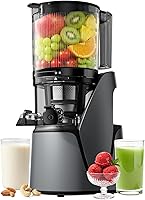
Can a Cold Press Juicer Handle Leafy Greens?
Yes, a cold press juicer for leafy greens can process spinach, kale, and similar leaves when the model supports them. Choose by loading method, cleanup needs, and counter space, then prepare greens to match the machine.
On this page (7 sections)
- What makes a cold press juicer suitable for leafy greens?
- Which juicers are worth comparing for leafy greens?
- How should you choose between these juicers?
- How should you prepare and load leafy greens?
- What mistakes cause poor feeding or extra cleanup?
- How should you clean up after juicing greens?
- Which cold press juicer for leafy greens should you choose?
Yes, a cold press juicer for leafy greens can process spinach, kale, lettuce, and similar leaves when the model supports them. The best choice depends on how you want to load ingredients, how much space you have, and which parts you'll clean after each batch.
Choose the Nama J2 for recipe-at-once loading, the Hurom H330 for a large self-feeding hopper with texture options, or the Omega All-in-One for greens plus other food preparation. All 3 support leafy greens, but they suit different kitchen routines.
What makes a cold press juicer suitable for leafy greens?
Support for leafy ingredients and a workable feeding method matter more than motor wattage alone. Light leaves need to reach the auger steadily, while long stems need preparation that keeps fibers from bunching up.
A cold press juicer uses an auger to crush and press produce, then separates juice from pulp. Our guide to how a cold press juicer works explains that process.
Don't choose by speed alone: a lower RPM number doesn't tell you which machine will extract more juice from your recipe. Loading design, ingredient preparation, and a clean screen also affect how smoothly a batch runs.
Think about your usual mix, too. A glass made mostly from greens calls for a different amount of produce and feeding attention than an apple-and-cucumber recipe with a handful of spinach.
Which juicers are worth comparing for leafy greens?
Pick the loading style first, then compare cleanup and extra uses. Nama and Hurom offer self-feeding hoppers, while Omega adds several food-preparation functions and specifically supports wheatgrass.
The cold press juicer buying guide covers the broader choices if you're still deciding which type fits your routine.
Is the Nama J2 a good cold press juicer for leafy greens?
The Nama J2 Hands-Free Juicer suits someone who wants to prepare a mixed recipe, load it together, and reduce repeated feeding. Its self-feeding hopper processes leafy greens alongside other produce.
The J2 includes juice and pulp containers, a juice strainer, a coarse strainer, and a cleaning brush. Quick-release parts help with disassembly, but the removable parts require hand washing.
It measures 9 in deep, 9.8 in wide, and 17.7 in high. Check overhead clearance for opening and loading the hopper, rather than measuring only the space occupied by the base.
Nama backs the J2 with a 15-year warranty. Choose it if you'll use batch loading regularly; skip it if hand washing is a deal breaker or the height makes access awkward under your cabinets.
Does the Hurom H330 suit family batches?
The Hurom H330 Slow Juicer suits a household that wants to load a larger mixed recipe together. Its 2-liter self-feeding hopper accepts leafy greens as well as whole fruits and vegetables.
A fine strainer supports smoother, lower-pulp juice, while a coarse strainer gives a fuller texture. Those choices help if people in your household prefer different juice textures.
The H330 also makes nut milk and smoothies; its ice cream strainer is sold separately. Hurom provides a 15-year warranty, and the removable parts require hand washing.
It measures 8 in deep, 19 in wide, and 11 in high, so allow enough width plus room for the containers. Choose it for shared batches and texture choices; skip it if counter width is tight or you'll rarely fill a larger hopper.
Who should choose the Omega All-in-One?
The Omega All-in-One Cold Press Juicer suits someone who wants leafy-green juice, wheatgrass juice, and other food-preparation uses. It can also make nut butters, nut milks, baby food, pasta, and sorbets.
Its included tools cover those jobs, with a juice cone, homogenizing cone, and 6 nozzles. Choose it when you have specific uses for those attachments and space to keep them organized.
Omega allows top-rack dishwasher cleaning for removable parts, with the manual guiding which pieces can go in. That may fit your routine better than washing every removable part by hand.
The machine measures 19.69 in deep, 7.09 in wide, and 13 in high. Skip it if counter depth is limited or recipe-at-once hopper loading is your main goal.
How should you choose between these juicers?
Choose around the work you'll repeat every day: preparing produce, loading it, and cleaning the machine. Extra functions help only if they replace tasks you already do or genuinely plan to start.
For mostly mixed green juice, prioritize convenient loading and easy access to the sink. For wheatgrass, Omega explicitly supports that ingredient; don't assume every machine that handles spinach is also suitable for grasses.
Measure the working space with room for juice and pulp containers, opening lids, and removing parts. A machine that fits under a cabinet may still need to move forward before you can load it.
Also consider where the parts will dry. If cleaning space is your main constraint, our guide to easy-to-clean juicers helps you compare the features that affect the daily routine.
How should you prepare and load leafy greens?
Wash, drain, and trim greens before switching on the juicer. Set out the juice and pulp containers, assemble the machine as directed, and check that the lid and other locks are secure.
Rinse leaves under running water and separate folded or bunched leaves so trapped dirt can wash away. Remove damaged sections, then let excess water drain so it doesn't dilute the juice.
Prepare stems according to the machine's instructions. Cut long, fibrous pieces when required, and remove stems that aren't suitable for the model.
For a feed chute, fold loose leaves into small bundles if directed and use only the supplied pusher. For a self-feeding hopper, follow its loading order and fill limit without packing leaves down tightly.
Our guide to how to use a cold press juicer covers assembly and the full operating routine.
Should you alternate greens with firmer produce?
Alternating small portions can help move leaves through a feed-chute juicer. An allowed piece of apple or cucumber can follow a loose bundle, provided that feeding method matches the manual.
Don't treat firm produce as a tool for forcing through a blockage. Wait for ingredients to move through, and keep the feed opening from becoming packed.
Self-feeding hoppers may use a different loading order, so follow that model's directions instead of copying a feed-chute routine. For fibrous additions, see our guide to putting celery in a juicer.
Which greens should you start with?
Start with a small amount of a tender, approved green, such as spinach or lettuce. That keeps the first batch manageable and helps you adjust the flavor before using a large bunch.
Kale adds a stronger taste and often needs more stem preparation. If the juice tastes too sharp or bitter, change the ingredient balance rather than assuming the machine is at fault.
What mistakes cause poor feeding or extra cleanup?
Overpacking, rushing, and letting pulp dry on the screen create avoidable work. Smaller portions and prompt rinsing make a green-juice routine easier to repeat.
Don't push harder when feeding slows or reach into a running machine. Stop and follow the clearing or reverse procedure, then unplug before reaching inside or taking parts apart.
Avoid judging extraction from one handful of greens. Leaves vary in size and moisture, so compare similar recipes before deciding that a change in preparation helped.
Don't repeatedly refeed wet pulp unless the manual permits it. Reprocessing adds work and can create feeding problems without producing a useful amount of extra juice.
How should you clean up after juicing greens?
Clean the screen and pulp passages before residue dries. Turn off and unplug the machine, remove the parts as directed, and empty the pulp container.
Use the supplied brush where appropriate, paying attention to screen holes and places where fibers collect. Rinse alone may leave residue, so wash with dish soap and follow the care instructions for each part.
Keep the motor base out of water and let removable parts dry before storing them. For the full routine, see how to clean a cold press juicer.
Which cold press juicer for leafy greens should you choose?
Pick the Nama J2 for batch loading, Hurom H330 for shared recipes and texture choices, or Omega for wheatgrass and extra food preparation. Let your counter space and preferred cleaning method settle the final choice.
Keep the first few recipes small, use approved ingredients, and make sure cleanup fits your day before expanding to larger batches. A cold press juicer for leafy greens earns its space when the whole routine is practical.
If you plan to mix greens with larger pieces of produce, compare loading designs in our guide to the best juicers for whole fruits and vegetables.
Frequently asked questions
Can a cold press juicer juice spinach?
Yes, a cold press juicer that supports leafy greens can process spinach. Wash and drain the leaves, then remove damaged parts before loading.
Fold small bundles for a feed chute if instructed, or follow the hopper loading order for a self-feeding machine.
Should you roll leafy greens before juicing?
Roll or fold leafy greens only when that suits your juicer's feeding method. A loose bundle can make small leaves easier to feed through a chute, but a tightly packed wad can restrict movement.
Self-feeding hoppers have their own loading directions, so don't assume every model needs rolled leaves.
Can you put kale stems in a cold press juicer?
You can include kale stems if your juicer's manual allows them, with any required trimming or cutting. Long, tough fibers need more care than tender leaves.
Remove stems when directed, and stop if feeding slows rather than forcing a thick bunch through the machine.
Does a cold press juicer extract all the juice from leafy greens?
No juicer extracts every drop from leafy greens. Leaf freshness, preparation, feeding pace, and the machine all affect the result.
Judge your routine across similar recipes rather than one handful, and don't keep feeding pulp through unless the manual allows it.
Some moisture in the pulp is normal.