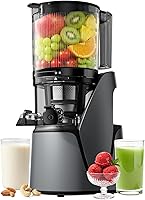
6 Best Juicers for Carrots and Beets (November 2026)
The best juicers for carrots and beets include the Ninja NeverClog JC151 for everyday kitchen use, the Godspeeds Smoothpress 6-Inch for prep-conscious cooks, and the Aeitto 3-in-1 6-Inch Juicer for varied family recipes.
On this page (10 sections)
- How we chose juicers for carrots and beets
- Juicer comparison for carrots and beets
- Best juicers for carrots and beets by use
- How to choose the best juicer for carrots
- How much carrot juice can you make at once?
- How should you prepare carrots and beets for juicing?
- How do you set up and feed a carrot juicer?
- How do you keep carrot pulp from becoming a cleaning chore?
- Which mistakes should carrot-juice buyers avoid?
- Which juicer should you choose for carrots and beets?
The Ninja NeverClog JC151 is the best juicer for carrots and beets for most kitchens because it combines pulp choice, reverse operation and dishwasher-safe juice-contact parts. Choose a wide-chute model if chopping keeps you from juicing, or a large hopper if you prepare several servings at once.
Carrots and beets need a machine that can process firm roots without turning every glass into a long prep and cleanup job. The right choice depends on the whole routine, from scrubbing vegetables to clearing pulp from the filter.
Think about your usual recipe before comparing machines. A glass of straight carrot juice calls for a different workflow than a family batch with apples, beets, celery and greens.
For broader choices, see our guide to the best cold press juicers and juicers for whole fruits and vegetables. Our guide to how a cold press juicer works explains how an auger presses produce and separates the pulp.
Our picks at a glance
-
1

-
2

-
3

How we chose juicers for carrots and beets
We prioritized firm-produce support, manageable feeding and practical cleanup. Texture options and batch capacity then separate the picks for different households.
For everyday use, a reverse control and a clear washing routine are useful features. A machine that fits your kitchen and your patience for cleaning is more likely to become part of breakfast.
We also distinguished a wide opening from a batch hopper. One reduces cutting, while the other holds ingredients so you can load more of a recipe before starting.
We compared the features and care instructions without ranking machines by advertised juice-yield percentages. Those percentages don't provide a shared comparison using the same carrots, recipe and measurement method.
Juicer comparison for carrots and beets
Choose Ninja for an everyday routine, Godspeeds for less prep or Aeitto for several recipe types. Kuvings and Hurom focus on batch feeding, while VITAPLUS pairs a metal auger with juice and nut milk use.
The table separates feeding, texture options and care so you can compare the jobs you'll do each time. Pay particular attention to the cleaning column if you expect to juice every morning.
| Product | Best for | Feeding | Texture options | Care | Our score |
|---|---|---|---|---|---|
| Ninja NeverClog JC151 | everyday kitchen use | Feed produce as directed | Less Pulp and Lots of Pulp filters | Dishwasher-safe juice-contact parts | 8.8 |
| Godspeeds Smoothpress 6-Inch | prep-conscious cooks | 6 in chute | Toothed filter | Detachable filter rinses under water | 8.1 |
| Aeitto 3-in-1 6-Inch Juicer | varied family recipes | 6 in chute with self-feeding | Mesh-free extraction system | Rinse straight-through chamber | 7.6 |
| Kuvings AUTO10 Hands-Free | large-batch households | 3-liter hopper with auto-cutting blade | Juice, smoothie and sorbet screens | Removable parts and cleaning tool | 7.5 |
| Hurom H330 Slow Juicer | mixed-texture households | 2-liter self-feeding hopper | Fine and coarse strainers | Hand wash only | 7.4 |
| VITAPLUS 5.8-Inch Juicer | daily juice-and-milk makers | 5.8 in chute | Built-in strainer for juice and nut milk | Top-rack dishwasher safe; hand washing suggested | 7.1 |
Best juicers for carrots and beets by use
Start with the Ninja NeverClog JC151 unless a specific need points elsewhere. The alternatives make sense when less chopping, larger loads or extra recipes matter more to you.
Ninja NeverClog JC151: Best for everyday kitchen use
- 150-watt high-torque motor
- Start/Stop and Reverse programs
- 2 pulp filters
- Dishwasher-safe juice-contact parts
A practical choice for regular carrot and beet juice, with texture control and a clear cleanup routine. Its compact design suits kitchens where the juicer stays on the counter.
Pros
- Reverse program helps manage jams
- Choice of two pulp textures
- Anti-drip lever helps control spills
Cons
- 24 oz jug needs emptying during larger recipes
- Changing pulp texture requires swapping filters
The Ninja is the clearest choice for regular carrot and beet juice when you want simple controls and a choice of texture. Its high-torque auger supports firm produce, and the reverse program gives you a way to respond when feeding slows.
The Less Pulp and Lots of Pulp filters suit households whose drink preferences differ. Pick the filter before assembly so you don't need to interrupt a batch to change it.
Its juice jug holds 24 oz, while the pulp container holds 36 oz. For larger recipes, watch both containers and pause to empty them before either becomes too full.
The anti-drip lever helps when you remove the jug to pour. Juice-contact parts can go in the dishwasher, though rinsing away loose carrot fibers first keeps them from drying onto the surfaces.
Choose Ninja if you make modest batches and want useful controls without extra recipe functions. Skip it if your main goal is loading a large recipe at once and reducing repeated feeding.
Godspeeds Smoothpress 6-Inch: Best for prep-conscious cooks
- 6-inch feed chute
- 300-watt motor
- 58 RPM slow press
- 10-year warranty
The wide opening reduces cutting for mixed carrot juice recipes with apples, oranges or cucumbers. Choose it when prep work is the main barrier to making juice.
Pros
- Wide opening for whole produce
- Reverse function
- Godspeeds provides a 10-year warranty
Cons
- Oversize produce still needs cutting
- Toothed filter needs attention during cleanup
Godspeeds suits cooks who want fewer knife cuts before making a carrot-based blend. Its 6-inch chute accepts whole apples, oranges and cucumbers, so accompanying ingredients can take less preparation.
The machine uses a 300-watt motor and runs at 58 RPM. Those figures describe its design, but the wide opening and 3-step assembly are the more useful reasons to choose it for your routine.
Carrots and beets should still fit freely and follow the preparation directions. A broad beet or a cluster of bent carrots may need dividing even when the opening looks generous.
The detachable toothed filter rinses under running water, and a brush is included for trapped pulp. Give the filter attention immediately after juicing rather than leaving fibers to harden in place.
Godspeeds provides a 10-year warranty. Choose this model if chopping is your main obstacle; skip it if you specifically need adjustable pulp filters or a machine with stated nut milk and sorbet functions.
Aeitto 3-in-1 6-Inch Juicer: Best for varied family recipes
- 6-inch feed chute
- Mesh-free system
- Juice, nut milk and sorbet functions
- Self-feeding
Aeitto suits households that will make nut milk and sorbet as well as carrot juice. Its mesh-free chamber removes fine mesh screens from the cleaning routine.
Pros
- Whole-carrot feeding
- No mesh screens to swap between recipes
- Includes a cleaning brush
Cons
- Nuts need 8 to 12 hours of soaking
- Frozen fruit needs 5 to 10 minutes of thawing for sorbet
Aeitto makes the most sense when carrot juice is one of several recipes you plan to make. Its mesh-free system supports juice, nut milk and sorbet without storing and swapping extra mesh screens.
The self-feeding chamber and wide opening suit mixed recipes with carrots, beets and other supported produce. Its straight-through chamber also gives buyers who dislike scrubbing fine mesh a different cleaning design to consider.
Mesh-free doesn't mean you can leave residue inside. Rinse the chamber after each batch and use the included brush where fibers remain, especially around openings and fitted parts.
The other functions need planning: nuts require 8 to 12 hours of soaking, and frozen fruit needs 5 to 10 minutes of thawing for sorbet. These are separate preparation steps beyond washing vegetables.
Choose Aeitto if your household will use those extra functions and wants to avoid mesh screens. Skip it if you only make carrot juice and would get more value from a clear choice of pulp textures.
Kuvings AUTO10 Hands-Free: Best for large-batch households

- 3-liter hopper
- 240-watt motor
- Hands-free feeding
- Juice, smoothie and sorbet screens
The large hopper suits households that prepare several servings in one session. Plan a regular counter space for this tall, heavy machine.
Pros
- Loads a full recipe into a large hopper
- Kuvings specifies up to 45 minutes of continuous running
- Detachable Smart Cap for cleaning
Cons
- 15.5 lb weight makes frequent moving less convenient
- 19 in height needs overhead clearance
Kuvings AUTO10 is the batch-focused choice for households that prepare several servings in one session. Its 3-liter hopper and auto-cutting blade let you load a recipe of whole fruits and vegetables for automatic feeding.
Kuvings specifies up to 45 minutes of continuous operation from its 240-watt motor. That allowance matters for longer sessions, but you still need to monitor the juice and pulp containers as the recipe moves through.
The included juice, smoothie and sorbet screens add options beyond root-vegetable juice. Keep those accessories together so changing recipes doesn't turn into a search through kitchen drawers.
At 19 in high and 15.5 lb, this machine needs a planned home. Allow room above it for opening and loading, plus space beside it for the collection containers.
Choose AUTO10 if loading larger recipes solves a regular household need. Skip it for an occasional small glass, particularly if you would have to lift the machine out of storage every time.
Hurom H330 Slow Juicer: Best for mixed-texture households

- 2-liter hopper
- Self-feeding
- Fine and coarse strainers
- Hand-wash care
Choose the H330 when batch feeding and a choice of juice textures matter together. It suits households willing to wash the removable parts by hand.
Pros
- Whole-produce hopper
- Fine and coarse texture choices
- Also makes nut milk and smoothies
Cons
- Hand washing required
- Ice cream strainer sold separately
Hurom H330 suits households that want automatic batch feeding and different juice textures. Its 2-liter hopper holds whole produce, while fine and coarse strainers let you choose a smoother or fuller drink.
That combination is useful if one person prefers low-pulp carrot juice and another likes more body. Plan separate batches when changing strainers rather than expecting to switch texture while the machine is running.
The H330 also makes nut milk and smoothies. The ice cream strainer is sold separately, so choose it for the included functions unless you plan to add that accessory.
Hurom specifies hand washing, making the sink routine part of the buying decision. Set aside a drying area for the removable parts so they can dry fully before storage.
Choose this model if texture choice matters alongside batch loading and you are comfortable washing parts by hand. Skip it if putting juice-contact parts in the dishwasher is essential to keeping up a daily habit.
VITAPLUS 5.8-Inch Juicer: Best for daily juice-and-milk makers

- 5.8-inch chute
- Stainless steel auger
- 250-watt AC induction motor
- 5-year limited warranty
VITAPLUS suits frequent users who want a stainless steel auger and make both vegetable juice and nut milk. One built-in strainer serves both jobs.
Pros
- Food-grade stainless steel auger
- Wide opening for whole apples and carrots
- VITAPLUS provides a 5-year limited warranty on all parts
Cons
- Hand washing suggested for long-term durability
- 14.5 lb weight makes frequent moving less convenient
VITAPLUS suits frequent users who specifically want a food-grade stainless steel auger for vegetable juice and nut milk. Its 5.8-inch opening accepts whole apples and carrots, and it also supports beets.
A 250-watt AC induction motor drives the auger at 46 RPM. Choose it for the material and dual-use design rather than treating a lower rotation speed as proof of better carrot juice.
One built-in strainer serves juice and nut milk, reducing the need to change screens between those jobs. Follow the preparation directions for each ingredient instead of applying carrot-feeding habits to nuts or other dense foods.
VITAPLUS provides a 5-year limited warranty on all parts. Top-rack dishwasher cleaning is supported, though the brand suggests hand washing for long-term durability.
Choose this model if the metal auger is a priority and you'll use both functions. Skip it if you want separate fine and coarse texture options or a lighter machine to move between a cupboard and counter.
How to choose the best juicer for carrots
Choose around the step you most want to simplify: cutting, feeding, adjusting texture or washing. Motor wattage alone won't tell you which machine will fit your kitchen routine.
Write down your usual ingredients and number of servings before deciding. That keeps a feature such as sorbet making from distracting you when your real need is a quick glass before work.
Does a wider chute make the best juicer for carrots?
A wider chute helps when produce preparation takes too long, especially in blends with apples or cucumbers. Carrots are often narrow enough already, so a larger opening may save more work on the other ingredients than on the carrots themselves.
Shape matters as well as width. A forked carrot or broad beet may need cutting even when a straight piece fits, and an opening should never become a reason to force food downward.
Should you choose manual feeding or a hopper?
Choose a hopper when you regularly prepare enough produce to benefit from loading a recipe together. For a small glass, feeding a few prepared pieces as you go may be a reasonable tradeoff.
Automatic feeding reduces repeated loading, but you still need to remain nearby. Watch the collection containers and listen for a change in operation rather than leaving a running appliance unattended.
How smooth do you want carrot juice?
Choose a fine filter or lower-pulp option if you dislike a thick, grainy drink. A coarse option makes more sense when some suspended pulp is welcome.
Juice can separate after it stands, so stir it before deciding the texture is wrong. If you always strain it afterward, include washing that extra strainer in your cleanup plans.
Do you need more motor watts?
Don't use wattage as a stand-alone ranking for hard vegetables. The auger, feeding design and preparation requirements also affect how the machine processes a carrot or beet.
Likewise, a reverse function is a useful control rather than permission to overload the chamber. Our guide to choosing a juicer explains how to weigh the parts of the machine together.
How much carrot juice can you make at once?
Plan around finished servings and container space, not hopper size alone. A hopper holds raw ingredients, while a juice jug collects liquid, so their capacities aren't interchangeable.
Start with the amount you expect to drink rather than filling the machine simply because space remains. Larger loads also create more pulp to collect and more juice to store.
Leave room beside the machine for both containers, a bowl of washed produce and a place for trimmings. A narrow counter can feel crowded even when the motor base fits.
If several people want different blends, make the mildest recipe first and follow the manual's directions between batches. Beet flavor and color can carry into a carrot-only drink when residue remains inside.
How should you prepare carrots and beets for juicing?
Scrub, inspect and cut produce as needed before switching on the juicer. Whole-produce feeding reduces knife work, but it doesn't remove washing or trimming.
Wash carrots and beets under running water, using a produce brush to remove soil from creases. Trim the ends and remove damaged areas with a clean knife.
Peeling is mainly a taste and condition choice for sound roots, subject to your machine's instructions. If beet juice tastes too earthy, try a smaller proportion of beet before peeling an entire batch.
Keep cut produce in a bowl within reach so you don't need to handle a knife beside a running machine. Beet juice can stain porous surfaces, so clean drips promptly and use a suitable cutting board.
For a first blend, start with carrots and a small piece of beet. Add a supported ingredient such as apple for sweetness or cucumber for a lighter flavor, then adjust one ingredient at a time.
How do you set up and feed a carrot juicer?
Assemble the juicer fully before plugging it in, then feed produce at the pace the machine accepts. Correctly seated parts and open outlets matter as much as the size of the vegetables.
Start with clean, dry parts and follow the manual's order for fitting the auger, filter, chamber and lid. Put the juice and pulp containers in position before adding produce.
Check any juice cap or anti-drip control so liquid can reach the jug as directed. A closed outlet used at the wrong time can turn a simple batch into a spill.
Use only the supplied pusher when the instructions call for it. Keep fingers and utensils out of the feed path, and let the auger draw food in without hard downward pressure.
For manually fed recipes, add another piece after the previous one has begun moving through. With a hopper, respect its fill guidance and avoid wedging produce tightly into place.
If processing stops, use reverse only as the manual directs. Switch off and unplug before taking parts apart to clear an obstruction.
Our guide to using a cold press juicer covers the full sequence from assembly to pouring.
How do you keep carrot pulp from becoming a cleaning chore?
Rinse removable parts soon after juicing, before fibers dry onto filters and outlets. Quick attention usually makes more difference than waiting for a convenient time later.
Switch off, unplug and disassemble according to the manual. Empty the pulp into a suitable waste container before carrying the parts to the sink.
Rinse away loose fibers, then use the cleaning brush on filter holes, grooves and the pulp outlet. Avoid sharp tools that could damage a screen or fitted surface.
Follow each machine's care instructions for detergent, water temperature and dishwasher placement. Keep the motor base out of water and wipe its exterior as directed.
Let parts dry fully before putting them away. A complete drying area beside the sink makes daily juicing easier than repeatedly balancing wet components on a crowded counter.
Which mistakes should carrot-juice buyers avoid?
Avoid buying for the largest headline number while overlooking the daily work. Chute width, motor watts and hopper volume each describe one part of the process.
- Forcing whole roots through: Cut awkward produce instead of treating the opening as a challenge.
- Packing the chamber tightly: Leave the space required for ingredients to move and feed properly.
- Ignoring the pulp container: A large hopper doesn't stop the waste container from filling.
- Assuming all accessories are included: Match the box contents to the recipes you actually want to make.
- Expecting extra functions to need no prep: Nut milk and sorbet have their own ingredient instructions.
- Leaving cleanup until later: Dried carrot fibers take more effort to remove from small openings.
Don't judge extraction by pulp appearance alone. Produce freshness, ingredient mix and filter choice can all change how the pulp looks and feels.
If a recipe tastes too strong, adjust the next small batch instead of making a large amount first. Carrot and beet blends are easier to refine when you change one ingredient at a time.
Which juicer should you choose for carrots and beets?
The best juicer for carrots is the one that removes the main obstacle in your routine. Choose Ninja for everyday texture control, Godspeeds when chopping is the barrier or Aeitto when nut milk and sorbet will get regular use.
Pick Kuvings for larger household recipes and Hurom for batch feeding with fine and coarse texture choices. Choose VITAPLUS when a stainless steel auger and regular juice-and-milk preparation are your priorities.
Before ordering, measure the full working space, including lid clearance and collection containers. Then read our guide to cleaning a cold press juicer and choose the care routine you can keep up after every batch.
Our top 3 picks at a glance
-
1
-
2
-
3
Frequently asked questions
Can a slow juicer handle whole carrots and beets?
Yes, a suitable slow juicer can process carrots and beets, but each piece must fit comfortably and meet the machine's prep instructions. Cut wide beets or awkward carrots instead of pushing them through.
Our guide to juicers for whole fruits and vegetables explains how feeding designs differ.
Should carrots and beets be peeled before juicing?
Peeling is optional for sound carrots and beets unless your juicer's instructions require it. Scrub them under running water, trim the ends and remove damaged areas before cutting.
Peeling can change an earthy flavor, but it doesn't replace washing the produce or cleaning your cutting board and tools.
How do I reduce pulp in carrot and beet juice?
Use the machine's finer filter or lower-pulp setting, then strain the finished juice if you want it smoother. Ninja includes a Less Pulp filter, while Hurom offers a fine strainer.
Let juice pass through a kitchen strainer without pressing the pulp hard, which can push more fine particles through.
Are wide-chute juicers easier to clean?
No, a wide chute mainly reduces produce preparation; filter design and care instructions decide much of the cleaning work. Mesh screens need their small holes cleared, while mesh-free chambers still need rinsing.
Compare dishwasher care with hand washing, and use our juicer cleaning guide to plan the routine.
What else can I juice with carrots and beets?
Apples, cucumbers, celery and leafy greens can join carrot and beet blends when your machine supports them. Start with a small amount of beet, then adjust the mix to your taste.
Our cold press juicer guide for leafy greens covers choices for recipes that include more leaves.