Is a Juicer Worth the Cost, Time and Cleaning?
A juicer is worth it if you'll replace juice you already buy or make it often enough to justify the work. Count produce costs, prep, cleanup and storage before choosing a machine.
On this page (8 sections)
- Is a juicer worth it for your routine?
- What costs should you count?
- How much time do prep and cleanup add?
- Will you have room to use and store it?
- Does cold press juicing fit what you want to make?
- How do you keep everyday juicing manageable?
- What mistakes make a juicer poor value?
- So, is a juicer worth it for you?
A juicer is worth it if you'll replace juice you already buy or enjoy making it often enough to justify the work. It makes less sense if you want an occasional glass and dislike washing several parts afterward.
The machine is only the starting cost. Your decision also depends on produce, kitchen space and whether juicing fits a normal weekday.
Is a juicer worth it for your routine?
A juicer earns its place when you have a specific use for it, such as making vegetable juice with breakfast. A vague plan to eat better is a weak reason to buy another appliance.
Choose 2 recipes you'd actually drink and decide when you'd make them. Include shopping and cleanup in that plan, rather than counting only the minutes when juice comes out.
If you mainly want a filling fruit drink, consider using a blender you already have. A smoothie keeps the blended pulp, while a juicer separates much of it from the drink.
Juice doesn't need to replace whole fruit and vegetables to be useful. Buy the machine because you enjoy juice and want control over its ingredients, rather than expecting it to transform your diet.
What costs should you count?
Count the machine, ingredients and waste, then compare them with juice you'd otherwise buy. Homemade juice isn't a saving if it simply adds a new expense to your week.
Start with one recipe and estimate its ingredient cost per serving. Allow for peels, pits, separated pulp and produce that spoils before you use it.
For a rough break-even point, divide the machine's cost by your savings per serving. If homemade juice costs as much as your usual prepared drink, the reasons to buy are taste, ingredient choice and convenience at home.
Seasonal produce and recipes that share ingredients with meals can help limit waste. Buying a large bag of greens for one small batch creates a different cost than using vegetables already in your fridge.
Our guide to how much a good juicer costs can help you compare machine budgets. If cost is the main concern, see juicers on a budget before choosing a model.
How much time do prep and cleanup add?
Allow time for assembly, produce prep, feeding and washing, not just extraction. The feature worth paying for is the one that removes the chore you most want to avoid.
A wide chute reduces cutting for suitable ingredients. A self-feeding hopper reduces the need to add pieces one at a time, while dishwasher-safe parts reduce hand washing after use.
None of these features washes produce or clears away pulp for you. Picture the full job from taking ingredients out of the fridge to putting clean parts away.
Read how to clean a cold press juicer before choosing a machine. If that routine already feels like too much work, a larger hopper won't solve the problem.
When is a wide-chute juicer worth it?
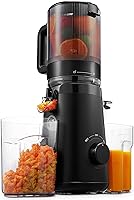
A wide-chute juicer is worth considering when cutting produce is your main obstacle. The AAOBOSI suits households that want fewer cuts and expect to use its juice, nut milk and sorbet functions.
It has a 100-fluid-ounce capacity, and AAOBOSI describes its slow masticating system as designed to reduce pulp buildup. Treat clog resistance as help with processing, not a reason to force ingredients through.
Skip this option if hand washing is the task you're trying to avoid. Extra functions also add little value if you'll only make juice.
A wide opening doesn't make every ingredient suitable whole. Remove hard pits, prepare tough skins as directed and cut anything that exceeds the machine's instructions.
Will you have room to use and store it?
A juicer needs working space as well as storage space. Measure where the base, juice jug and pulp container will sit, then check whether you can open and remove parts beneath your cabinets.
The Ninja NeverClog JC151 measures 12.11 inches deep, 7.15 inches wide and 15.93 inches high. Its included jug holds 24 ounces, with a separate 36-ounce pulp container.
Choose the Ninja if you want dishwasher-safe juice-contact parts and a choice between Less Pulp and Lots of Pulp filters. Those features suit someone who cares about drink texture and wants less hand washing.
Skip it if you want to collect a large household batch without emptying the jug. Work out your usual serving volume first, rather than choosing a machine by its width alone.
Leave space to drain the washed parts, too. A juicer that fits on the counter can still be awkward if its containers and drying pieces crowd your only food prep area.
Does cold press juicing fit what you want to make?
Choose a cold press juicer around your regular ingredients and feeding routine. Learn how a cold press juicer works before comparing models.
If green juice is your main goal, read whether a cold press juicer can handle leafy greens. Build your recipe around ingredients the machine can process, rather than assuming every fruit or vegetable behaves alike.
The Nama J2 suits regular juice makers who want to load a recipe together instead of feeding individual pieces. It measures 9 inches deep, 9.8 inches wide and 17.7 inches high, so check overhead clearance.
Nama backs the J2 with a 15-year warranty and includes a cleaning brush. Read the warranty terms before buying, and give more weight to whether you'll use the hopper than to the length of coverage alone.
Skip the J2 if you only want an occasional glass or dishwasher cleanup is essential. Self-feeding reduces attention during processing, but you still need to prepare ingredients, stay nearby and wash the parts.
For a wider view of the category, use our complete cold press juicer buying guide to compare the features that match your recipes.
How do you keep everyday juicing manageable?
Keep juicing manageable by starting with small recipes and cleaning promptly. A routine built around one useful serving is easier to judge than a large batch you may not finish.
Before first use, wash the removable food-contact parts as directed and assemble the machine with the power disconnected. Place both containers correctly and check that the lid and other locks are secure.
Wash produce before cutting it. Feed it at the pace the manual allows, and use the supplied pusher when needed rather than fingers or kitchen tools.
If processing slows, stop adding ingredients. Use reverse only as directed, and unplug the machine before taking it apart to clear a blockage.
Empty the pulp container and rinse removable parts before residue dries. Brush the strainer as instructed, wipe the base and let washed parts dry before storage.
The guide to using a cold press juicer explains the steps involved. If you decide to buy, compare the machine cost with the price of a good juicer and the features you need.
What mistakes make a juicer poor value?
The biggest mistakes are buying for an imagined routine and making more juice than you'll drink. Start with your real schedule, then choose capacity and functions to match it.
Don't confuse motor wattage with the best choice for your kitchen. Feeding design, container size and washing instructions have a more direct effect on how you'll use the machine.
Avoid treating “easy to clean” as meaning no cleaning. Filters, outlets and seals still need attention, even when parts can go in the dishwasher.
Make only what you have a plan to drink, and refrigerate juice promptly if you aren't drinking it right away. Follow FDA guidance on juice safety, since home extraction doesn't remove harmful germs.
Give pulp a realistic destination, such as compost or a suitable recipe. Saving every batch without a plan only shifts the waste into another container.
So, is a juicer worth it for you?
A juicer is worth it when the drink you want fits a routine you'll keep. Before ordering, choose your recipes, measure the working space and decide who will clean the parts.
Pick the AAOBOSI if reducing cutting and making nut milk or sorbet matter to your household. Choose the Ninja for adjustable pulp and dishwasher-safe juice-contact parts, or the Nama J2 for loading a full recipe at once.
Wait if you can't name a regular use or don't want to clean after each session. Buying prepared juice occasionally may fit your habits better.
Compare budget juicers if the upfront cost is your main concern. For the final feature checks, follow how to choose a juicer before committing.
Frequently asked questions
Is buying a juicer cheaper than buying juice?
Making juice can be cheaper if it replaces prepared juice you already buy and your ingredient cost per serving is lower. Include spoiled produce and the machine's cost in your calculation, then divide that cost by the savings per serving to estimate how many servings would recover it.
How often do you need to use a juicer for it to be worth it?
There's no fixed weekly target, but a specific routine makes the decision clearer. Write down the days you'd use it and the servings you'd make, then account for shopping and washing parts each time; occasional use can still be worthwhile if choosing your own ingredients matters enough to you.
Are juicers hard to clean?
Juicers need cleaning after each session, especially around the strainer and pulp outlet. Rinsing removable parts promptly helps prevent pulp from drying in place, but follow the manual for brushing and washing; dishwasher-safe juice-contact parts can reduce hand washing, while the motor base should stay out of water.
Is a cold press juicer worth it?
A cold press juicer is worth considering if you want to make juice regularly from produce suited to its auger and strainer. Choose around feeding effort, cleanup and batch size rather than the cold press label alone; a self-feeding hopper helps with loading, while dishwasher-safe parts address a different chore.