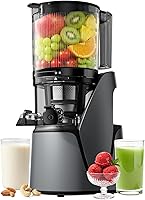
Canoly C16 vs Aeitto 3-in-1: Which Is Better Value? (November 2026)
For Aeitto juicer vs Canoly juicer, choose Canoly for its separate strainers and motor warranty, or Aeitto if avoiding mesh screens is your main priority. Both handle juice, nut milk and sorbet.
On this page (10 sections)
- Aeitto juicer vs Canoly juicer: what is the main difference?
- Who should buy Canoly, and who should buy Aeitto?
- How much do chute size and capacity change daily prep?
- Will either machine fit your counter and storage space?
- How should you set up either juicer for the first batch?
- Which cleanup routine makes either machine easier to keep using?
- Are nut milk and sorbet useful reasons to choose either one?
- What common mistakes should you avoid with these juicers?
- When is TUUMIIST worth adding to this comparison?
- Aeitto juicer vs Canoly juicer: which should you choose?
Choose Canoly for its separate strainers and motor warranty, or Aeitto for a routine without mesh screens. The Aeitto juicer vs Canoly juicer decision comes down to the parts you want to handle, wash and store.
Both make juice, nut milk and sorbet, so neither wins simply by offering more recipe types. The useful question is which design fits the breakfast you actually make and the cleanup you'll do afterward.
Canoly is the stronger choice for buyers who value motor coverage and don't mind changing strainers. Aeitto is the more direct choice if scrubbing screens is the task most likely to stop you from making juice.
Aeitto juicer vs Canoly juicer: what is the main difference?
The main difference is separate strainers versus a mesh-free system. Canoly includes juice and sorbet strainers, while Aeitto handles its three functions without changing mesh screens.
That changes the routine before and after a recipe. With Canoly, you select the right strainer and keep the other one somewhere clean and accessible.
Aeitto removes that screen-swapping step. You still need to empty pulp, wash food-contact parts and check for trapped fibers after use.
Neither design gives you a reason to expect more juice from every ingredient. Choose around the work each design removes from your kitchen, rather than assuming one extraction layout must always beat the other.
For more detail on the C16's parts and features, see our Canoly C16 review.


Who should buy Canoly, and who should buy Aeitto?
Buy Canoly if motor coverage matters most, and Aeitto if screen care is your main obstacle. Both suit people who will make enough juice or other recipes to justify assembly and washing.
When does the Canoly juicer beat Aeitto for your routine?
Canoly makes sense if you plan to keep the machine in regular use and value its 15-year motor warranty. Read the coverage terms, including any registration or claim requirements, before making that your deciding factor.
Motor coverage and whole-machine coverage are different. Don't assume the same terms apply to strainers, seals, containers or other parts.
The C16 also suits cooks who are comfortable choosing a dedicated attachment for each task. Keeping the spare strainer near the machine makes a switch from juice to sorbet easier to manage.
Canoly says its AC brushless motor operates at 35 dB. That may interest early-morning users, but there isn't a matching Aeitto noise figure here to support a noise winner.
Skip Canoly if changing and storing strainers already sounds like a chore. Its warranty won't make that daily step disappear.
When is Aeitto the more useful choice?
Aeitto is the clearer fit if you dislike cleaning fine mesh or keeping track of extra screens. Its straight-through chamber gives you a simple place to focus rinsing, with an included brush for residue that needs attention.
The recipe book and app recipe ideas also suit someone who wants a starting point beyond apple juice. Use them to build a few repeatable recipes before filling the kitchen with ingredients for several different drinks.
Skip Aeitto if you expect mesh-free to mean maintenance-free. Sticky fruit residue, pulp and nut particles still need to come off the removable parts after use.
If you're choosing mainly around washing, our guide to easy-to-clean juicers shows other designs worth comparing.
How much do chute size and capacity change daily prep?
Chute width helps with loading large pieces, while chamber capacity helps with batch preparation. Neither number tells you how many glasses of juice you'll get.
Both main contenders have a 6-inch feed chute. Canoly's hopper holds 90 oz, while Aeitto has a 100 oz capacity.
Those capacity figures shouldn't become a serving calculation. A chamber filled with leafy greens contains a different amount of usable produce than one filled with dense pieces of apple.
A wider opening also doesn't make every ingredient ready to juice. Wash produce, remove hard pits and follow the machine's directions for peels, tough parts and ingredient size.
For fibrous stalks, shorter pieces can help prevent long strands from winding around internal parts. Cut them across the fibers rather than relying on the opening to accept a full stalk.
Start with the amount you'll drink soon instead of filling the chamber just because space is available. A small first batch lets you adjust sweetness, bitterness and texture without wasting a large recipe.
Our guide to whole-fruit and vegetable juicers explains how produce size and prep habits affect the value of a wide chute.
Will either machine fit your counter and storage space?
Measure operating space and access above the lid, not just the machine's footprint. You need room to load ingredients, place containers and lift parts off for cleaning.
Canoly measures 9.45 inches deep, 6.89 inches wide and 17.32 inches high. Aeitto measures 8 inches deep, 8 inches wide and 16.9 inches high.
Canoly is narrower, while Aeitto is shallower and slightly shorter. The better fit depends on your counter layout, especially if cabinets hang directly above the intended spot.
Allow room beside the base for juice and pulp containers. A machine that fits tightly between other appliances may still be awkward to empty or take apart.
The C16 weighs 12.6 pounds, which matters if you plan to move it from a cabinet for every batch. Decide where it will live before assuming you'll carry it back and forth each morning.
Also reserve drying space near the sink. Removable parts need somewhere to drain fully without blocking the counter you use to prepare breakfast.
How should you set up either juicer for the first batch?
Start with a small, simple juice recipe and assemble the machine according to its manual. Learning one function first makes it easier to spot an incorrectly seated part or an ingredient problem.
Wash the removable food-contact parts as directed before first use. Keep the motor base and electrical connections dry.
Fit the auger, chamber and any required strainer in the stated order. If a lid or part won't lock easily, stop and check its position rather than forcing it.
Place the juice and pulp containers before adding ingredients. Prepare all the produce first so you aren't cutting food while trying to watch the machine.
Let ingredients move through at the machine's pace. Use only the supplied pusher when needed, and keep fingers and kitchen utensils out of the feed opening.
For a stall or blockage, follow the manual's stop and reverse directions. Unplug the machine before opening it to remove trapped food.
Our guide to using a cold press juicer walks through the full process from produce prep to shutdown.
Which cleanup routine makes either machine easier to keep using?
Rinse promptly and clean the pulp path thoroughly. Preventing residue from drying is more useful than leaving a full machine beside the sink and hoping it will wash easily later.
Aeitto's screen-free chamber suits someone who wants to avoid fine-mesh scrubbing. With Canoly, the detachable pulp outlet lets you reach a spot where compressed fibers can collect.
Turn off and unplug the machine before disassembly. Empty the pulp container, separate the washable parts and rinse loose residue away before brushing.
Pay attention to seams, corners and outlets rather than judging cleanliness by the large surfaces alone. Nut mixtures and soft fruit can leave a film even when the parts look mostly clear.
Canoly's removable parts are dishwasher safe, but follow its directions for placement and wash settings. Keep the motor base out of the dishwasher and out of standing water.
For Aeitto, follow its care instructions instead of assuming screen-free parts can go in a dishwasher. Use the included brush where running water doesn't remove residue.
Let everything dry fully before reassembly or closed storage. Keep the brush where you'll use it, rather than buried in a drawer across the kitchen.
Our cold press juicer cleaning guide covers the places worth checking when a quick rinse leaves fibers behind.
Are nut milk and sorbet useful reasons to choose either one?
The extra functions add value when they replace something you already make or buy regularly. If you only want vegetable juice, don't let dessert features decide the comparison.
Nut milk requires planning before the machine starts. Aeitto calls for soaking nuts for 8–12 hours, so this is an overnight-prep task rather than an instant breakfast drink.
Follow the recipe's ingredient and water amounts. Changing the ratio changes the drink's body, and the texture you prefer may take a few small batches to find.
Clean nut residue promptly and thoroughly, especially in a household managing nut allergies. Shared equipment needs careful cleaning between recipes.
For sorbet, Aeitto calls for thawing frozen fruit for 5–10 minutes before use. Remove pits and prepare fruit as directed, rather than feeding in a hard frozen block.
Use Canoly's own directions for its sorbet strainer and recipe preparation. Timing or ingredient guidance for one machine shouldn't automatically transfer to the other.
Decide whether frozen-fruit desserts will be a weekly habit or an occasional idea. Our guide to juicers with sorbet functions helps you weigh the accessory space against actual use.
What common mistakes should you avoid with these juicers?
Avoid overloading, poor ingredient prep and delayed cleaning. These choices create work that a wide chute or an extra function can't remove.
- Buying around yield claims alone. Aeitto advertises 99% juice yield, but that doesn't predict your output from every recipe. Produce freshness, ingredient mix and preparation all affect the result.
- Trying to force faster feeding. Let the machine process what is already inside before adding more. Pressure from a pusher isn't a substitute for correct preparation.
- Treating every peel the same. A thin apple peel and a thick citrus rind call for different decisions. Follow ingredient guidance instead of using chute fit as permission to juice anything whole.
- Expecting blender texture. A juicer separates pulp from liquid, while a blender keeps ingredients together. If you want a thick whole-fruit drink, consider whether juicing matches that goal.
- Making a large batch before learning your taste. Begin with modest amounts of strong ingredients such as ginger or bitter greens. Add more in later batches once you know the balance you like.
- Leaving juice warm on the counter. Drink it promptly or refrigerate it in a clean, covered container. A large loading chamber isn't a reason to prepare more than you can store properly.
For a broader framework before choosing a machine, read how to choose a juicer.
When is TUUMIIST worth adding to this comparison?
Consider TUUMIIST when loading room is your priority. Its 6.5-inch chute is wider than either main contender's opening, and it pairs that with a 100 oz hopper.
It uses one strainer for juice, nut milk and sorbet, so you don't need to switch strainers between those functions. That makes it relevant if you like Aeitto's approach to fewer accessory changes but want a wider opening.
The tradeoff is counter width. TUUMIIST measures 13 inches wide, so check the working space beside it as well as the room available for the base.
Its care directions include both dishwasher-safe and hand-wash-only wording. Hand-wash removable parts until you've confirmed which instructions apply to each component.
Skip it if the wider chute doesn't solve a real prep problem. An opening that accepts larger produce has little value when you already cut ingredients into smaller pieces.
Aeitto juicer vs Canoly juicer: which should you choose?
Choose Canoly for motor coverage and separate strainers, or Aeitto to avoid mesh-screen care. In the Aeitto juicer vs Canoly juicer decision, the better value is the machine whose daily routine you're willing to repeat.
Before ordering, walk through one normal batch: where you'll wash produce, place the containers, empty pulp and dry the parts. If either machine makes that sequence awkward in your kitchen, resolve the space problem first.
Choose TUUMIIST instead when its extra loading room solves a clear need and you have the counter width. If none fits your routine, compare other designs in our cold press juicer buying guide.
The cold press juicer category also groups more comparisons and recommendations.
Frequently asked questions
Is the Canoly C16 better than the Aeitto 3-in-1?
Choose Canoly if you value its separate juice and sorbet strainers and motor warranty. Choose Aeitto if avoiding mesh screens is your main concern.
Both cover the same three recipe types, so decide around the parts you'll handle after each batch rather than the number of functions.
Which juicer has the larger capacity?
Aeitto has a 100 oz capacity, while Canoly has a 90 oz hopper. That difference concerns loading space, not a guaranteed amount of finished juice.
Produce shape, recipe mix and how ingredients settle affect each batch, so don't plan servings by treating either figure as juice output.
Which is easier to clean, Canoly or Aeitto?
Aeitto is the better fit if your main goal is avoiding mesh-screen scrubbing. Canoly's detachable pulp outlet helps you reach another common residue spot.
With either machine, empty the pulp and rinse removable food-contact parts promptly, before fibers and sticky juice dry onto the surfaces.
Can both juicers make sorbet and nut milk?
Yes, both make juice, nut milk and sorbet, but ingredient preparation still matters. Aeitto calls for soaking nuts for 8–12 hours and thawing frozen fruit for 5–10 minutes.
Use each machine's instructions for its own recipes, attachments and ingredient limits rather than transferring directions between brands.
Is the TUUMIIST worth considering instead?
Consider TUUMIIST if loading room matters more to you than Canoly's motor warranty or Aeitto's screen-free chamber. It combines a 6.5-inch chute with a 100 oz hopper and one strainer for all three functions.
Check its counter fit and confirm care directions before putting removable parts in a dishwasher.