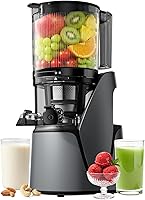
Nama J2 vs Nama J3 Cold Press Juicers: Which Is Better? (November 2026)
Choose the Nama J2 for most recipes and the higher overall score. Pick the Nama J3 when a smaller, lighter juicer and 15-fluid-ounce capacity fit your kitchen better.
On this page (12 sections)
- Nama J2 vs Nama J3: which one wins overall?
- How do the J2 and J3 compare side by side?
- Which model is better for larger recipes?
- Does the J3 save meaningful counter space?
- Which juicer is better for hands-free use?
- Which model suits leafy greens and mixed produce?
- What does each motor rating mean in daily use?
- How do setup and cleanup compare?
- Who should buy the Nama J2?
- Who should buy the Nama J3?
- What should you know about cold press operation?
- Nama J2 vs Nama J3: which one should you choose?
Choose the Nama J2 for most recipes and the higher overall score. Pick the Nama J3 when a smaller, lighter juicer and 15-fluid-ounce capacity fit your kitchen better.
The Nama J2 vs Nama J3 decision is mainly about capacity, counter space and motor power. Both are hands-free cold press juicers from NAMA, both operate at 50 RPM, and both use corded electric power.
The J2 has a 1.9-pound capacity and a 200 W motor. The J3 has a 15-fluid-ounce capacity and a 130 W motor, but its smaller cabinet is easier to place in a tight kitchen.
This comparison looks at the measurable differences first, then explains which model suits batch recipes, small spaces, leafy greens, cleanup routines and occasional juicing.
Nama J2 vs Nama J3: which one wins overall?
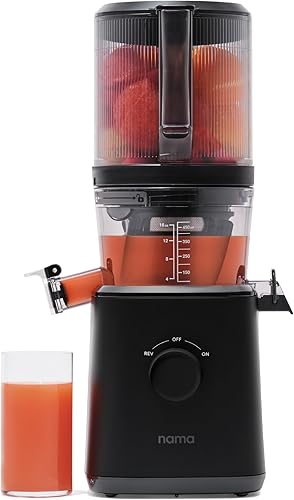
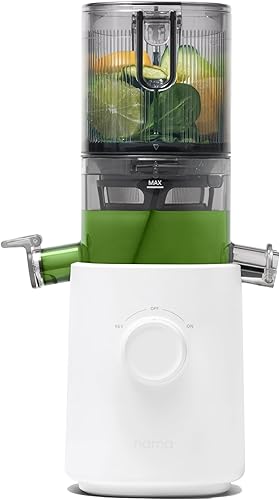
The Nama J2 wins overall because its larger capacity and 200 W motor give it more room for regular recipes. The Nama J3 wins the compactness decision, so it remains the better fit when counter space and weight matter most.
The J2 measures 9 inches deep, 9.8 inches wide and 17.7 inches high. It weighs 12.1 pounds and comes in Black with a painted finish.
The J3 measures 6.5 inches deep, 8.9 inches wide and 15.4 inches high. It weighs 9.7 pounds and comes in White with an uncoated finish.
That makes the J3 shorter, narrower, shallower and lighter. The difference is useful in a small kitchen, but the J2's extra size supports a larger stated capacity.
Both models use a single speed and operate at 50 RPM. Both also have self-feeding hoppers, so the core hands-free routine is shared rather than a reason to choose one over the other.
How do the J2 and J3 compare side by side?
The J2 is the larger, more powerful model, while the J3 is the smaller and lighter model. Their shared 50 RPM speed and hands-free hopper make the table's capacity, motor and dimensions the clearest buying differences.
| Feature | Nama J2 Hands-Free Juicer | Nama J3 Compact Juicer |
|---|---|---|
| Capacity | 1.9 pounds | 15 fluid ounces |
| Maximum power | 200 watts | 130 watts |
| Speed | 1 speed, 50 RPM | 1 speed, 50 RPM |
| Dimensions | 9 x 9.8 x 17.7 in | 6.5 x 8.9 x 15.4 in |
| Item weight | 12.1 pounds | 9.7 pounds |
| Color | Black | White |
| Recommended uses | Juice, sauce, smoothies, sorbet | Fruits, vegetables, leafy greens, nuts |
| Care | Hand wash only | Hand wash only |
| Warranty | 15 years | 15 years |
The J2 includes a juice container, juice container lid, pulp container, juice strainer, coarse strainer, pusher, auger, hopper, chamber, spinning brush, hopper lid and detachable power cord.
The J3 includes a juice container, pulp container, juice strainer, coarse strainer, auger, hopper, chamber, spinning brush, detachable power cord and juicer base. It also includes a recipe book.
Which model is better for larger recipes?
The Nama J2 is better for larger recipes because its stated capacity is 1.9 pounds. That gives you more room to load produce before processing, which suits regular juice preparation and recipes that use several ingredients.
A larger capacity changes the rhythm of juicing. You can prepare the produce for one recipe, load the hopper, and let the hands-free feeding design handle the process while you work on another kitchen task.
The J2 also has the higher maximum power at 200 watts. That figure does not turn the J2 into a different kind of machine, since both models are cold press juicers with a 50 RPM operating speed, but it supports the J2's position as the fuller-size option.
The J3's 15-fluid-ounce capacity points to shorter sessions. It fits someone who makes a smaller drink, juices for one person or prefers to prepare fresh batches without keeping a larger machine on the counter.
For family routines, repeated recipes or a large amount of produce, choose the J2. For one smaller serving and less equipment around the kitchen, the J3 is the more proportionate choice.
Does the J3 save meaningful counter space?
Yes. The Nama J3 saves counter space in every listed dimension.
Its 6.5-inch depth, 8.9-inch width and 15.4-inch height make it easier to fit where the J2's 9-inch depth, 9.8-inch width and 17.7-inch height would feel crowded.
A counter location needs more than a footprint. You also need room to place produce, handle the hopper and remove the juice and pulp containers after processing.
The J3's lighter 9.7-pound weight helps if you store the juicer between uses. The J2 weighs 12.1 pounds, so it is better suited to a dedicated counter position or a storage shelf that can handle regular lifting.
Measure the counter depth and the open height above it. A cabinet shelf can make a 15.4-inch juicer easier to place than a 17.7-inch model, even when both have a similar daily workflow.
The J3 is the clear pick for studio kitchens, compact counters and users who want to move the juicer after each session. Choose the J2 when the available space comfortably holds its larger body and the extra capacity will be used.
Which juicer is better for hands-free use?
Both models are equally strong for hands-free feeding because each has a self-feeding hopper. You can load a recipe at once instead of adding produce one piece at a time.
That shared design matters if your main goal is to reduce active feeding during juicing. The J2 and J3 both let you prepare the ingredients, place them in the hopper and move to another task while the machine processes them.
The difference is how much recipe work each hopper supports in one session. The J2's 1.9-pound capacity gives it the edge for a larger prepared recipe, while the J3's 15-fluid-ounce capacity keeps the machine aligned with smaller batches.
Both models have one speed and run at 50 RPM. You are not choosing between a variable-speed machine and a fixed-speed machine here, so the decision stays focused on size, power and capacity.
Pick the J2 for hands-free family or batch preparation. Pick the J3 when hands-free use matters but your normal recipe is small enough for 15 fluid ounces.
Which model suits leafy greens and mixed produce?
The Nama J2 is the better choice for frequent leafy greens and mixed-produce recipes. Its 1.9-pound capacity and 200 W motor give it more headroom for a larger preparation routine.
The J2 is recommended for juice, sauce, smoothies and sorbet, and its product information highlights leafy greens and other produce. That range makes it the more flexible pick for a kitchen that uses the juicer for more than one drink style.
The J3 is also recommended for fruits, vegetables, leafy greens and nuts. Its slow pressing speed is presented for nutrient-rich recipes, and the 50 RPM operation matches the J2.
The J3 makes sense when those ingredients are part of smaller servings. Its compact design does not remove it from leafy-green use, but the 15-fluid-ounce capacity sets a smaller limit for each session.
If leafy greens are an occasional ingredient in a small drink, the J3 is enough for the stated use. If you plan larger recipes or want more room before stopping to unload, the J2 is the firmer choice.
What does each motor rating mean in daily use?
The J2 has the higher motor rating at 200 watts, while the J3 uses 130 watts. The J2 therefore fits heavier or larger preparation routines better, while the J3 keeps its compact design for smaller sessions.
Wattage is only one part of a juicer comparison. Both models operate at 50 RPM, and both have one speed, so motor power does not change the basic slow-pressing format.
The J2's 200 W motor pairs with its 1.9-pound capacity. That combination favors a user who wants to load more produce and process a fuller recipe in one routine.
The J3's 130 W motor pairs with its 15-fluid-ounce capacity and smaller cabinet. That combination favors a user whose priority is a lighter machine that fits a limited counter.
Choose by workload instead of treating the watt number as a standalone quality score. The J2 is the overall winner for regular volume, while the J3 is the practical pick for compact, smaller-batch juicing.
How do setup and cleanup compare?
Setup is similar on both models because each has quick-release parts, easy assembly and hand-wash-only care. The J2 includes a cleaning brush, and the J3 includes a cleaning brush as part of its included components.
Before the first use, give yourself room to identify the chamber, hopper, auger, strainer, juice container and pulp container. The detachable power cord on both models keeps the cord separate when you move or store the machine.
The J2 includes both a juice container with lid and a pulp container. It also includes a juice strainer, coarse strainer and pusher, so its included parts support different juice textures and the loading routine described for the machine.
The J3 includes a juice container, pulp container, juice strainer and coarse strainer. Its included recipe book gives the compact model an extra starting point for planning smaller drinks.
Both models are hand wash only. Rinse or wash the removable parts after use, use the included brush where needed and let the parts dry before storing them.
The quick-release design is useful when you want cleanup to remain part of the same short routine.
For the full details on the category, read our guide to what a cold press juicer means before deciding how much cleanup and prep your routine can support.
Who should buy the Nama J2?
Buy the Nama J2 if you want the best overall choice, larger recipes or broader daily use. It is the stronger fit for households that use juice, sauce, smoothies or sorbet and want a 1.9-pound capacity.
The J2's 200 W motor gives it the higher power rating, while its 50 RPM speed keeps it in the same slow-pressing class as the J3. Its hands-free hopper lets you load a full recipe rather than feeding ingredients one at a time.
Choose the J2 when the larger 9 x 9.8 x 17.7-inch cabinet fits your counter. Its 12.1-pound weight also makes it better as a stay-in-place appliance than a machine you move after every drink.
The included juice containers, lids, pulp container, strainers, pusher, brush and guides make it a fuller setup for regular use. NAMA also gives the J2 a 15-year warranty.
If you want a closer look at this model, read our Nama J2 Cold Press Juicer review. It is the right next step when the J2 already matches your recipe size and available space.
Who should buy the Nama J3?
Buy the Nama J3 if your kitchen is small, your batches are modest or you need a lighter machine. Its 6.5 x 8.9 x 15.4-inch size and 9.7-pound weight make storage and movement easier than with the J2.
The J3 still gives you a self-feeding hopper and 50 RPM operation. That means you keep the hands-free routine and slow pressing format while choosing a smaller 15-fluid-ounce capacity.
Choose the J3 for one-person juice sessions, compact counters and occasional use. Its 130 W motor suits that smaller role, and its recommended uses include fruits, vegetables, leafy greens and nuts.
The J3 includes a juice container, pulp container, juice and coarse strainers, spinning brush, detachable power cord and recipe book. It also carries a 15-year warranty.
A compact machine only helps if its capacity matches your habits. If you regularly prepare more than 15 fluid ounces or want to load a larger produce recipe, the J2's capacity is worth the extra counter space.
What should you know about cold press operation?
Both models use slow 50 RPM pressing, so the main choice is workload rather than speed. Cold press juicers separate juice from produce through a slower process than fast-spinning centrifugal designs.
The J2 and J3 both use a hopper, chamber, auger, strainer, juice container and pulp container. The hopper receives the prepared produce, while the strainer separates the juice from the remaining pulp during processing.
If you want the basic mechanics explained, our guide to how a cold press juicer works covers the parts and process in plain language. It helps you understand why prep, loading and cleanup are part of the ownership routine.
The J2's larger capacity makes that routine better for a full recipe. The J3's compact body makes it easier to keep the same general process in a smaller kitchen.
For broader shopping context, see our guide to the best cold press juicers. Use the J2 or J3 comparison here when those are the 2 NAMA models that fit your shortlist.
Nama J2 vs Nama J3: which one should you choose?
Choose the Nama J2 for most people because it has the higher score, larger capacity and 200 W motor. Its 1.9-pound capacity suits fuller recipes, and its hands-free hopper keeps the daily process simple.
Choose the Nama J3 when the decision starts with counter space. Its smaller dimensions, lower weight and 15-fluid-ounce capacity make it the better fit for a compact kitchen or smaller juice routine.
The winner for larger recipes is the J2. The winner for portability and storage is the J3.
The winner for leafy greens in bigger batches is the J2, while the J3 handles the same recommended ingredient group in a smaller format.
Both models share 50 RPM operation, one speed, corded electric power, quick-release parts, easy assembly and hand-wash-only care. That leaves a clear rule: pick the J2 when capacity leads, and pick the J3 when the cabinet size leads.
Frequently asked questions
Is the Nama J2 bigger than the Nama J3?
Yes. The Nama J2 measures 9 x 9.8 x 17.7 inches and weighs 12.1 pounds, while the Nama J3 measures 6.5 x 8.9 x 15.4 inches and weighs 9.7 pounds.
The J3 takes less counter space and is easier to move.
Which Nama juicer has the larger capacity?
The Nama J2 has the larger capacity at 1.9 pounds. The Nama J3 has a 15-fluid-ounce capacity, so it fits smaller juice sessions and kitchens where a compact machine matters more than batch size.
Do the Nama J2 and J3 both feed produce hands-free?
Yes. Both models use a self-feeding hopper that lets you load a recipe at once instead of adding produce one piece at a time.
That feature suits multitasking and makes the 2 models different mainly in size, capacity and motor power.
Are the Nama J2 and J3 easy to clean?
Both models have quick-release parts and easy assembly, and both are designed for hand washing. The J2 includes a cleaning brush, while the J3 includes a cleaning brush and recipe book with its juice and pulp containers and strainers.
Which Nama juicer is better for leafy greens?
The Nama J2 is the stronger choice for a larger leafy-green routine because it has a 1.9-pound capacity and 200 W motor. The J3 also lists fruits, vegetables and leafy greens among its recommended uses, but its 15-fluid-ounce capacity suits smaller batches.