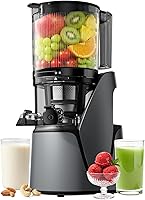
Hurom H320 vs Nama J2: Which Juicer Fits You? (November 2026)
The Hurom H320 wins the hurom h320 vs nama j2 comparison for most people, thanks to its adjustable pulp control and quiet 240 W motor. The Nama J2 is the better fit if you want a taller, lighter machine and the brand's 15-year warranty.
On this page (8 sections)
The Hurom H320 wins this hurom h320 vs nama j2 comparison for most people. Its fine and coarse strainers give you control over pulp, and its 240 W AC motor runs quietly enough for early mornings.
The Nama J2 is the better fit if you want a wide hopper that takes a whole recipe and a 15-year warranty.
Both are self-feeding cold press juicers, so you load produce and let the machine work. The differences show up in pulp control, motor specs and how each one fits a kitchen.

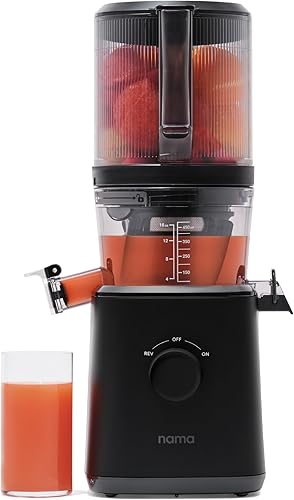
Hurom H320 vs Nama J2: the quick verdict
Pick the Hurom H320 if you want to adjust pulp and keep the noise low. Pick the Nama J2 if hands-off batch juicing and a long warranty matter more than strainer choices.
Neither machine is a bad buy, but they suit different juicing habits.
The H320 carries our top score at 9.6, while the J2 scores 8.3. That gap reflects the H320's two strainers and its control lever, which let you change the texture of your juice.
The J2's strength is convenience: a wide-mouth hopper built to hold an entire recipe.
Think about how you juice. If you make one or two glasses at a time and care about how much pulp lands in the glass, the H320 fits.
If you prep a week of juice in one sitting and want to walk away, the J2's approach makes more sense.
Both machines are hand wash only. That shared care requirement means cleanup time depends more on part count than on either brand's claims.
Our nama j2 review covers the J2's parts and assembly in more detail if you want a closer look before deciding.
How do the Hurom H320 and Nama J2 differ side by side?
The H320 brings strainer choices and a 240 W motor; the J2 brings a wide-mouth hopper and a 15-year warranty. The table below sets their main specs next to each other.
| Product | Best for | Motor | Feeding | Dimensions | Our score |
|---|---|---|---|---|---|
| Hurom H320 Cold Press Juicer Machine | pulp control | 240 W | Self-feeding hopper | 8 x 8 x 16 in | 9.6 |
| Nama J2 Hands-Free Juicer | hands-off batches | 200 W | Self-feeding hopper | 9 x 9.8 x 17.7 in | 8.3 |
The H320's specs list a 240 W motor, 0.5 liters of capacity and dimensions of 8 x 8 x 16 inches. It weighs 9.53 kg, which is about 21 lb.
The J2 lists a 200 W motor running at 50 RPM, a 1.9-pound capacity figure and dimensions of 9 x 9.8 x 17.7 inches. Its weight is 12.1 pounds.
That weight gap is real and worth planning for. The H320 is a heavier, sturdier machine, while the J2 is easier to lift onto a counter or move aside for storage.
If you keep your juicer in a cabinet and haul it out daily, the J2's lighter build helps.
What the motor specs mean in practice
The H320's 240 W motor drives its Slow Squeeze auger, which Hurom says limits oxidation and extracts juice that keeps for up to 72 hours. The J2's 200 W motor runs at 50 RPM, a slow speed meant to press rather than grind.
Both are single-speed machines in practice. The H320's control lever changes pulp level through its strainers, not through motor speed.
The J2 has one speed, according to its specs, so you set it and let it run.
Slow RPM matters for heat. A 50 RPM auger turns slowly enough that produce isn't whipped, which helps keep juice fresh.
Hurom doesn't publish an RPM figure for the H320, so the J2's number is the clearer benchmark between the two.
What the build materials tell you
The H320 lists its blade material as Ultem, a tough engineering plastic Hurom uses for the parts that touch produce. The J2 lists plastic as its body material, and the H320's outer shell is plastic too.
Neither machine has a stainless steel or glass housing, so expect a lighter, more scratch-prone exterior on both.
The H320's finish is uncoated, so there's no coating to chip or peel over time. The J2's finish is painted, which gives it a smoother look but means the finish deserves gentle handling.
Both bodies wipe down easily, and since both are hand wash only, the sink routine matters more than the surface finish.
The H320's 120-volt corded setup fits standard US outlets. The J2 is also corded electric and includes a detachable power cord, which makes it easier to move to the sink without dragging the whole machine.
Which juicer handles pulp better?
The Hurom H320 wins on pulp control, because its fine and coarse strainers and control lever let you choose the texture. The Nama J2 includes juice and coarse strainers, but it gives you less say over how much pulp reaches your glass.
Hurom says the H320's auger squeezes produce like a hand-squeezer and leaves bone-dry pulp. The control lever works with the two strainers so you can adjust the pulp level to your taste.
That matters if you like clear apple juice one day and a thicker carrot blend the next.
The J2's two strainers split the job between juice and a coarser press. Nama says the J2 maximizes juice output and leaves less waste than traditional juicers.
Its strainer setup doesn't offer the same lever-based adjustment the H320 has.
If you juice leafy greens, the H320's fine strainer helps keep kale and spinach pulp out of the glass. If you mostly press apples and carrots and don't mind some body in the juice, the J2's simpler setup is enough.
Our guide to the centrifugal vs masticating juicer difference explains why slow augers like these two leave drier pulp than fast spinning blades.
Which one is easier to load and run?
The Nama J2 is built around loading a whole recipe at once, while the Hurom H320 lets you add produce while it's still running. Both are hands-free in the sense that you don't feed produce piece by piece.
The J2's wide-mouth hopper takes an entire recipe, and Nama says you can add your fruits and vegetables and walk away. The spinning brush and hopper lid are part of its included parts.
That design suits batch juicing: load it, start it, and do something else.
The H320's self-feeding hopper also fits whole produce, but its pitch is different. Hurom highlights a larger opening and inlet so you can add more ingredients even while the juicer runs.
That helps when you're topping up a recipe rather than loading everything at once.
For a family making several glasses each morning, the H320's running top-up is handy. For one person prepping a big batch for the week, the J2's load-and-leave approach saves more standing time.
If you also want frozen dessert options, our look at the juicer and sorbet maker category covers machines built for that, since neither of these two lists sorbet as a main use.
How much produce each hopper realistically takes
The H320's hopper is described as high volume and family size, and Hurom says it fits whole produce. That means apples, oranges and similar-sized items can go in without pre-cutting, though you'll still want to quarter large beets or fibrous celery stalks so the auger isn't overloaded.
The J2's wide-mouth hopper is pitched as fitting an entire recipe at once. Nama doesn't quote a chute measurement in its specs, but the hopper lid and pusher suggest you load through the top and let the auger pull produce down.
For leafy greens, pack them loosely rather than cramming them tight so the auger can grab them.
The H320's inlet stays open while the machine runs, so you can keep adding kale or spinach mid-press. The J2's lid setup favors loading everything up front.
Neither machine promises to process tough stalks without some prep, so keep a knife nearby either way.
How do they compare on noise and kitchen space?
The Hurom H320's quiet motor is its calling card; the Nama J2's lighter, taller body is easier to move and store. Noise and footprint are the two practical points that decide where each machine lives.
Hurom describes the H320's AC motor as near-silent and whisper quiet, and says it won't wake the household before breakfast. That's a maker claim, but it points to a design goal: early-morning juicing without disturbing anyone.
The J2's 50 RPM slow speed also keeps noise low, though Nama doesn't make the same quiet-motor claim.
On space, the H320 stands 16 inches tall and the J2 stands 17.7 inches. Both need counter clearance above the hopper, so check the gap under your cabinets.
The H320's 8-inch square footprint is slightly smaller than the J2's 9 x 9.8-inch base.
The weight difference decides storage for many people. At 9.53 kg the H320 is best left on the counter or moved rarely.
At 12.1 pounds the J2 is light enough to lift in and out of a cabinet without much effort. The J2's painted finish also wipes clean easily, so a quick wipe before storage is enough on most days.
Cleanup and assembly on each machine
Both juicers are hand wash only. The H320's easy assembly helps beginners take it apart and put it back together.
The J2 adds quick-release parts and a cleaning brush in the box, plus a detachable power cord.
Neither has a dishwasher-safe parts list in its data. Plan on a sink rinse and hand wash after each session, and keep a brush handy for the strainers.
If cleanup speed is your top priority, compare part counts when you unbox, since both machines ask the same hand-washing routine of you.
Who should buy the Hurom H320?
Buy the Hurom H320 if pulp level matters to you and you want quiet juicing in a family kitchen. Its two strainers and control lever make it the more adjustable of the two.
This juicer suits households that juice a mix of produce: kale and celery one day, apples and carrots the next. The fine strainer handles leafy greens, and the coarse one leaves more body when you want it.
The self-feeding hopper fits whole produce, so you spend less time chopping.
The quiet motor makes it a good fit for early risers who juice before the rest of the house wakes. The family-size hopper also suits several people drinking juice each day, and Hurom's 72-hour freshness claim means you can press a batch and keep it.
Skip the H320 if you move your juicer often or want the lightest machine possible. Its 9.53 kg weight and hand-wash requirement make it a leave-it-out appliance.
If a long warranty is your deciding factor, the J2's 15-year coverage is the stronger offer.
Who should buy the Nama J2?
Buy the Nama J2 if you want to load a full recipe, walk away, and come back to juice. Its wide-mouth hopper and 15-year warranty make it the hands-off choice.
The J2 suits batch juicers and meal preppers. Load the whole recipe into the wide-mouth hopper, start the machine, and use the time for something else.
Nama says the design cuts and juices produce for you, and the slow 50 RPM auger presses rather than grinds.
Nama backs the J2 with a 15-year warranty, a long coverage period for a kitchen appliance. The J2 is also the lighter machine at 12.1 pounds, so it's easier to store or move.
Quick-release parts and a cleaning brush help with the hand-wash routine.
Skip the J2 if you want to change pulp levels between batches. Its strainer setup gives you less control than the H320's lever and two strainers.
If you juice leafy greens and want a cleaner pour, the H320's fine strainer is the better tool. For a deeper comparison against another Hurom model, see our nama j2 juicer vs hurom h400 breakdown.
Which juicer should you buy?
For most readers, the Hurom H320 is the better buy in the hurom h320 vs nama j2 matchup. The Nama J2 is the right pick when hands-off batching and a long warranty outweigh pulp control.
Go with the H320 if you want to choose how much pulp ends up in your glass. Its fine and coarse strainers and control lever give you options the J2 doesn't match, and its quiet 240 W motor suits early-morning juicing.
The 0.5-liter capacity and family-size hopper fit households that juice daily.
Go with the J2 if you load once and walk away. Its wide-mouth hopper takes a whole recipe, its 50 RPM motor presses slowly, and Nama's 15-year warranty covers it for the long haul.
The lighter 12.1-pound body also helps if you store it in a cabinet.
Either way, measure your counter clearance and plan for hand washing. Pick the H320 for adjustable pulp and quiet mornings, and the J2 for batch loading and warranty length.
If you want to see how the J2 compares against another Hurom model before you commit, our nama j2 review and the nama j2 juicer vs hurom h400 comparison both help.
Frequently asked questions
Is the Hurom H320 or the Nama J2 better for leafy greens?
Both machines press leafy greens, but the H320's fine and coarse strainers let you adjust how much pulp ends up in the glass. Pick the H320 if you juice kale and spinach often and want a cleaner pour.
How big is the feeding hopper on each juicer?
The Hurom H320 uses a high-volume self-feeding hopper that fits whole produce, with a larger opening so you can add ingredients while it runs. The Nama J2's wide-mouth hopper is built to take an entire recipe at once.
Do either of these juicers need hand washing?
Yes. Both the Hurom H320 and the Nama J2 are hand wash only.
The J2 adds quick-release parts and a cleaning brush, while the H320's easy assembly helps you take it apart for washing.
Which juicer runs quieter, the Hurom H320 or the Nama J2?
The Hurom H320's near-silent AC motor is described as whisper quiet. The Nama J2 runs at a slow 50 RPM, which keeps noise down too.
Neither figure tells you the exact decibels, so expect both to be quiet enough for early mornings.
Can the Hurom H320 and Nama J2 both make juice that keeps for days?
Hurom says its Slow Squeeze technology limits oxidation and keeps juice fresh for up to 72 hours. Nama doesn't make that same storage claim for the J2, so plan to drink J2 juice sooner unless you store it carefully.