How to Use a Kuvings Whole Slow Juicer
To use the Kuvings whole slow juicer, load whole fruits and vegetables into the hopper, let the auto-cutting auger pull them down, and open the Smart Cap to pour. Run tough produce first and soft produce last, then rinse the removable parts right away.
On this page (11 sections)
- How do you set up a Kuvings slow juicer before juicing?
- How do you load whole fruits and vegetables into the hopper?
- How does the AUTO10 hands-free juicing cycle work?
- What order should you feed different produce?
- How do you pour and store the juice?
- What is the easiest way to clean the juicer afterward?
- How do you keep the juicer running well over time?
- Which screen should you use for juice, smoothies and sorbet?
- What should you check when a batch goes wrong?
- How does the AUTO10 compare with other cold press juicers?
- The short version of how to use the Kuvings whole slow juicer
To use the Kuvings whole slow juicer, load whole fruits and vegetables into the hopper, let the auto-cutting auger pull them down, and open the Smart Cap to pour. Run tough produce first and soft produce last, then rinse the removable parts right away.
The steps below follow the AUTO10, Kuvings' hands-free model with a 3-liter hopper and a 240W motor. The order is simple: set up, load, juice, pour, clean.
How do you set up a Kuvings slow juicer before juicing?
Assemble the juicing bowl, screen and hopper until each part locks, place a pitcher under both outlets, and plug in. A loose screen leaks pulp into the juice, so check the fit before adding produce.
Wash the removable parts first. Rinse the auger, screens and bowl, then dry them so no packing residue reaches your first glass.
Set the machine on a dry, level counter near an outlet. Leave room in front for the pitcher and the pulp container.
Check that the Smart Cap on the juice outlet is closed. A closed cap holds juice in the bowl until you open it, so the first pour stays clean.
How do you load whole fruits and vegetables into the hopper?
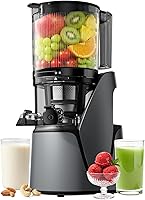
Fill the 3-liter hopper with whole produce and close the lid. The auto-cutting blade and the auger do the chopping that a manual slow juicer asks you to do with a knife.
Kuvings says the AUTO10 handles kale, beets, carrots and pineapple on its 240W motor. That list is a good guide to what the machine is built for.
Cut only what needs cutting. Halve apples wider than the feed opening, trim long carrots, and pit stone fruit before it goes in.
Skip fibrous stalks that wrap around an auger. Frozen fruit is only for the sorbet screen, not the juice screen, so thaw it slightly if you juice it.
Do you need to chop produce for a whole slow juicer?
No for most recipes. Whole apples, carrots, cucumber and leafy bunches fit the hopper, and the blade cuts them as they drop.
The exception is size and hardness. Anything wider than the opening or too long to sit under the lid needs a quick cut, and stone fruit needs its pit removed.
Leaves benefit from a light pack rather than a loose pile. A handful at a time feeds more evenly than a whole bunch stuffed in at once.
How does the AUTO10 hands-free juicing cycle work?
Press start, close the lid and let the auger crush and press the produce. You don't stand over the feed chute pushing food down with a plunger.
The slow, low-speed auger crushes rather than shreds, which is why the result is called cold press juice. Low speed means less heat and less air mixed into the juice.
The 240W motor runs 45 continuous minutes, enough for a large batch. Start with a small load to hear how the machine sounds, then add more.
The AUTO10 has juice, smoothie and sorbet screens. Swap the screen before you start, because changing it mid-batch means stopping and disassembling.
How long can the AUTO10 run in one session?
Kuvings rates the motor for 45 continuous minutes. That covers a family-sized batch of fibrous produce without a rest break.
For a very large batch, plan the juice in two rounds. Switch off between rounds and let the motor cool.
Don't treat 45 minutes as a target to fill. Most home batches finish well inside it.
What order should you feed different produce?
Feed hard produce first and soft produce last. Carrots and beets push pulp through the chute, and soft greens and cucumber flush the screen on the way out.
When a recipe mixes both, alternate hard and soft loads. This keeps the screen clear and the juice flowing.
Leafy greens go in near the end. A light pack of kale or spinach behind a carrot load helps carry the last of the juice out.
Juice wet fruit after the hard produce, before leafy greens. The juice they release helps move pulp that would otherwise cling.
How do you pour and store the juice?
Open the Smart Cap over a glass, let the juice flow, then close it and store the juice cold. The cap detaches for cleaning, so it's the control point for every pour.
Pour straight into a glass you plan to drink from. Cold press juice tastes best fresh, and a sealed jar in the fridge keeps it for the rest of the day.
Fill the jar close to the top to limit air contact. A small gap is fine; a half-empty jar lets the juice oxidize faster.
If you want a smoother texture, strain the juice through a fine bag before storing. The PRINKROOMY reusable mesh bag set comes in 100, 200 and 300 mesh sizes, and the drawstring fits over most jars.
What is the easiest way to clean the juicer afterward?
Rinse the hopper, auger, screen and bowl under warm water as soon as the batch ends. Pulp dries hard on mesh, and a dry screen takes far longer to clear.
Take the machine apart in the order the manual gives. Remove the hopper, then the auger, then the screen and bowl, so no part traps pulp.
Use the cleaning tool Kuvings includes on the screen mesh. A soft brush reaches the rim and the seam where the mesh meets the frame.
Detach the Smart Cap and rinse its seal. Kuvings designed the pulp chute to resist clogging, and a quick rinse keeps it that way.
For the full routine, our guide to how to clean a juicer covers soaking, brushing and drying each part.
Which brush helps with the tight spots?
The Betanull 8-piece set includes 3 crevice brushes and 2 right-angle brushes for narrow interiors. Those shapes reach the screen rim and the pulp chute seam where a sponge won't fit.
The set also has brass, steel and nylon wire brushes. Use the nylon one on plastic parts and keep the metal brushes away from the screen mesh.
How do you keep the juicer running well over time?
Rinse every part after each batch, dry it fully, and check the screen for stains before storage. Small habits keep the mesh clear and the motor cool.
Let the parts air-dry on a rack rather than sealing them wet. Trapped moisture in the bowl or cap seal is the usual cause of a musty smell between batches.
Check the screen after each use. A screen that stays stained or partly blocked pushes juice into the pulp and leaves the pulp wet.
Keep the motor base dry and wipe it with a damp cloth only. Don't submerge it or rinse it under the tap.
If cleaning feels like a chore, our guide to a juicer easy to clean compares machines built around faster cleanup.
Which screen should you use for juice, smoothies and sorbet?
Use the juice screen for clear juice, the smoothie screen for a thicker drink and the sorbet screen for frozen mixtures. The AUTO10 ships with all three.
The juice screen has the finest openings, so it holds back the most pulp. It suits carrot, apple and beet recipes where you want a clear glass.
The smoothie screen lets more pulp through for a thicker texture. Load fruit and leafy greens together and skip the straining bag.
The sorbet screen handles frozen mixtures. Follow Kuvings' sorbet recipe for the right ratio of frozen fruit to liquid, since a dry mixture strains the auger.
What should you check when a batch goes wrong?
Most problems come down to feed speed or a partly blocked screen. Slow the loading and clean the mesh before changing anything else.
Wet pulp means the auger never pressed the produce dry. Feed smaller loads and let the machine clear between them.
Juice that looks cloudy after the juice screen usually means soft produce went in too fast. Add a carrot or a few leaves to help the press.
A machine that stops mid-batch may have hit its run limit. Switch off, let it rest and start again.
How does the AUTO10 compare with other cold press juicers?
The AUTO10's advantage is the hands-free hopper, so it suits large batches and busy mornings. A smaller cold press juicer with a narrow feed chute asks for more chopping and more plunging.
The 3-liter hopper means you can load a full recipe, close the lid and walk away. That's the main difference between this machine and a standard slow juicer.
The 45-minute run time supports batch juicing for a family or a week of morning glasses. A smaller motor and bowl make that harder.
If you want to juice whole produce without pre-cutting, the AUTO10 is the pick. For a smaller kitchen or a single daily glass, a compact cold press model may fit better.
For a wider look at machines that take whole produce, see our guide to the juicer for whole fruits and vegetables. If you're new to the category, start with how to use a cold press juicer.
The short version of how to use the Kuvings whole slow juicer
Load whole produce, close the lid, let the auto-cutting auger press it, and open the Smart Cap to pour. Rinse the parts right after, and the machine stays ready for the next batch.
Keep the loading order in mind: hard produce first, soft produce last. That one habit keeps the screen clear and the pulp dry.
Clean the screen with the included tool and a thin brush before pulp dries. A few minutes at the sink saves a long soak later.
The main rule is to let the machine do the cutting. Load it, close it and leave the rest to the auger.
Frequently asked questions
Do I have to chop fruit before putting it in a whole slow juicer?
No for most produce. The AUTO10 has an auto-cutting blade and a 3-liter hopper, so you can load whole apples, carrots and kale.
Cut anything wider than the feed opening or longer than the hopper, and pit stone fruit first.
What order should I feed produce into a slow juicer?
Feed hard items like carrots and beets first and soft items like leafy greens last. The hard produce clears pulp through the chute, and the soft produce flushes the screen.
Alternate when a recipe mixes both.
How long can I run a whole slow juicer in one session?
The Kuvings AUTO10 runs 45 continuous minutes on its 240W motor. That covers large batches of kale, beets, carrots and pineapple.
If you juice past that, switch off and let the motor rest before a second session.
Why is my slow juicer pulp wet?
Wet pulp usually means the produce went in too fast or the screen was already clogged. Feed smaller loads and let the auger clear between them.
Clean the screen thoroughly, since a partly blocked screen forces juice into the pulp chute.
How do I clean a whole slow juicer after juicing?
Disassemble the hopper, auger and screens, then rinse them under warm water before pulp dries. Use the cleaning tool on the screen mesh and detach the Smart Cap to reach its seal.
Let the parts air-dry fully before reassembly.