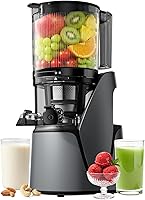
Cold Press Juicer vs Juice Extractor: Which Is Better? (November 2026)
Pick a cold press juicer if you want the clearest, most keepable juice; pick a fast centrifugal juice extractor if speed and a lower price matter more. In this cold press juicer vs juice extractor comparison, the winner for most readers is the Ninja NeverClog JC151.
On this page (11 sections)
- The quick verdict: cold press juicer vs juice extractor
- Side by side: what actually changes between the two
- Why the slow auger changes the juice in the glass
- Chute and hopper size decide how much prep you do
- How fast do you actually need to juice?
- Which is easier to keep clean?
- Which keeps juice fresher for longer?
- Texture and pulp control: a cold press advantage
- Who should buy a cold press juicer?
- Who should buy a juice extractor instead?
- The verdict: which one for most readers?
Pick a cold press juicer if you want the clearest, most keepable juice; pick a fast centrifugal juice extractor if speed and a lower price matter more. In this cold press juicer vs juice extractor comparison, the winner for most readers is the Ninja NeverClog JC151, a slow auger that handles fibrous produce and puts its juice-contact parts in the dishwasher.
The cold press juicer vs juice extractor question really comes down to one part: a slow auger or a fast spinning basket. That single difference drives the juice texture, the prep time, the cleanup and how long the juice lasts in the fridge.
Here you'll see what each type does well, where the cold press gives up speed, and which of the four cold press models here fits your kitchen.


The quick verdict: cold press juicer vs juice extractor
For most homes, the cold press juicer wins: it makes clearer juice with less foam and handles leafy greens better. Pick a juice extractor only if you juice rarely and want the fastest possible batch.
The cold press design crushes produce slowly between an auger and a strainer. That gentler action leaves more of the juice intact and folds in less air.
A centrifugal extractor shreds produce against a spinning basket and flings the juice out through a mesh screen at high speed. It's quicker, but it whips in foam and air.
Among the cold press models here, the Ninja NeverClog JC151 takes the overall pick. It runs a 150-watt high-torque motor at low speed, gives you two pulp filters and is compact enough to sit under kitchen cabinets.
The EanOruus 3-in-1 scores highest on specs and modes, but its 12.1 lb body and hand-wash care make the Ninja the easier everyday pick for most people.
Side by side: what actually changes between the two
The two types differ in speed, juice quality, prep time, cleanup and how long the juice keeps. Here's how the four cold press models here stack up against a typical fast extractor.
| Feature | Cold press juicer | Centrifugal juice extractor |
|---|---|---|
| How it works | Slow auger crushes and squeezes | Fast spinning basket shreds and flings |
| Speed | 50 to 55 RPM on the models here | Thousands of RPM |
| Foam and air | Less foam, less oxidation | More foam, more air |
| Leafy greens | Handles kale, celery and wheatgrass well | Struggles with fibrous greens |
| Prep speed | Slower per batch | Fastest per batch |
| Chute size | 5.8 to 6.5 in on the models here | Varies widely by model |
| Cleaning | Depends on model; some are dishwasher safe | Often a mesh basket to scrub |
| Product | Best for | Type | Power | Hopper | Our score |
|---|---|---|---|---|---|
| EanOruus 3-in-1 Cold Press Juicer | sorbet and nut milk | Cold press (auger) | 250 watts | 100 oz | 9.1 |
| Ninja NeverClog JC151 | overall | Cold press (auger) | 150 watts | 8.8 | |
| Nama J2 Hands-Free Juicer | big batches | Cold press (auger) | 200 watts | 8.3 | |
| YPONE 2-in-1 Juicer | whole fruit | Cold press (auger) | 400 watts | 7.3 |
The biggest gap for a family kitchen is not the headline speed but how the machine treats fibrous produce. A fast extractor can leave kale and celery half-juiced and clog the basket, while a slow auger grinds them down.
Why the slow auger changes the juice in the glass
A cold press juicer makes juice that looks and tastes cleaner because the auger squeezes rather than shreds. Less air means less foam on top and a slower color change in the fridge.
On a fast extractor the basket spins at thousands of RPM and throws juice against a mesh screen. That movement introduces air and heat, which is why the juice often comes out with a thick foam head.
A cold press auger turns at 50 to 55 RPM on the models here, so it pushes and squeezes produce at a pace that doesn't whip the liquid.
The EanOruus runs its auger on a 250-watt AC brushless motor and its maker says the design keeps nutrients intact. The Nama J2 turns at 50 RPM on a 200-watt motor and is built for leafy greens.
Both are slow by intent, and that's the point. For anyone who has read what a cold press juicer means, the payoff is in the glass, not the spec sheet.
Chute and hopper size decide how much prep you do
A wide chute and a large hopper save more time than a faster motor. On the models here, the feed opening ranges from 5.8 to 6.5 inches and the largest hopper holds 100 oz.
The EanOruus leads this group with a 6.5-inch chute that takes whole apples and oranges and a 100 oz hopper that holds produce for several days. That's a real time-saver if you juice for a family or meal prep.
The YPONE follows with a 5.8-inch chute that handles most whole fruit without precutting.
The Nama J2 takes a different route: a self-feeding hopper that lets you load the whole recipe at once and walk away.
The Ninja JC151 has a narrower feed than these three and a 24 oz juice jug with a 36 oz pulp container, so it suits smaller, more frequent batches.
A fast extractor often has a wide chute too, so this isn't a cold press-only advantage. But when you combine a wide chute with the slow auger's tolerance for fibrous produce, you spend less time cutting and less time clearing jams.
How fast do you actually need to juice?
A juice extractor is faster per batch, full stop. A cold press trades some of that speed for juice quality and gentler handling of greens.
A centrifugal extractor can push a glass of carrot and apple juice through in seconds. A slow auger takes noticeably longer for the same amount because it crushes and presses rather than shreds.
If you make one small glass in the morning and rush out the door, the speed gap is real.
The counterpoint is what you do with the time. The Nama J2's self-feeding hopper means you load and leave, so the machine works while you do something else.
The EanOruus and YPONE cut prep with their wide chutes, so you spend less time at the cutting board. The Ninja's compact jug suits a single serving or two without a long wait.
Pick a fast extractor if speed is the single thing you care about. Pick a cold press model if you'd rather spend a couple of extra minutes for a cleaner glass.
For the full mechanics, our guide on how a cold press juicer works walks through the auger and strainer.
Which is easier to keep clean?
Cleanup depends more on the model than the type. Some cold press juicers put their juice-contact parts in the dishwasher, while many fast extractors leave you scrubbing a fine mesh basket.
The Ninja JC151 is the easiest of this group to live with: all juice-contact parts are dishwasher safe and the design is built to come apart quickly. That matters if you juice most days.
The Nama J2 and EanOruus are hand wash only, so they ask for a few minutes at the sink after each batch. The YPONE lists both dishwasher and hand wash care, so check the parts you'll actually touch.
A centrifugal extractor's weak spot is its basket. The mesh traps pulp and needs a brush to clear, and pulp can dry on if you leave it.
A cold press juicer's auger and strainer are simpler shapes, but more parts come apart. If cleaning is your main worry, favor a model with dishwasher-safe juice parts.
Which keeps juice fresher for longer?
Cold press juice usually holds up longer in the fridge because less air and heat go into it. Fast extractor juice is best drunk the same day.
The slow auger's gentler action means less oxidation, so the color and flavor hold longer. That's the argument for pressing a larger batch and drinking it over two or three days.
The EanOruus's 100 oz hopper supports exactly that: load once, press a big batch, and store it.
Fast extractor juice foams up and starts to separate sooner. It's still fresh and fine to drink, but plan to finish it quickly.
If you like to batch a week of green juice, a cold press model is the better fit. If you drink juice within the hour, the difference narrows.
Texture and pulp control: a cold press advantage
Pulp filters give you a dial on texture that most fast extractors don't offer. The Ninja JC151 includes two interchangeable pulp filters for less pulp or lots of pulp.
That control matters if you like a smooth green juice one day and a thicker, fiber-rich drink the next. The Ninja's two filters let you choose.
The EanOruus adds a sorbet strainer for frozen fruit and a setup for nut milk, so it goes beyond juice entirely. The YPONE uses dual-layer 0.3 mm mesh strainers to reduce clogging and push yield.
A centrifugal extractor usually gives you one texture. You can strain the juice afterward, but you can't change how the machine presses.
For readers who care about mouthfeel and yield, this is where the cold press pulls ahead. Our roundup of the best cold press juicers compares more models on this point.
Who should buy a cold press juicer?
Buy a cold press juicer if you juice leafy greens, want clearer juice or plan to batch and store it. The four models here cover different priorities.
- The Ninja NeverClog JC151 is the best fit for most kitchens. It's compact, dishwasher friendly and gives you two pulp filters, all for everyday juicing.
- The Nama J2 suits busy households that want to load a recipe and walk away. Its self-feeding hopper and 15-year warranty are the draw, though it's hand wash only.
- The EanOruus 3-in-1 is for people who want more than juice. It makes sorbet and nut milk, takes whole fruit through a 6.5-inch chute and holds 100 oz in the hopper.
- The YPONE 2-in-1 fits anyone who wants a wide chute and a safety lock that stops the motor when the lid opens, at a lower score and with fewer accessories.
Who should buy a juice extractor instead?
Buy a fast juice extractor if speed and a simple workflow matter more than juice clarity. It's the better fit for occasional juicers who drink juice right away.
A centrifugal extractor wins when you make one glass in a hurry and don't want to wait on a slow auger. It's also the simpler machine to operate, often with a single speed and a wide chute.
If you mainly juice apples and carrots and drink them on the spot, its foam and shorter shelf life matter less.
Skip the cold press if you resent cleanup time and don't want to hand wash parts. Skip the extractor if you juice kale, celery or wheatgrass regularly, since the spinning basket struggles with fibrous greens.
For a closer look at how the two slow designs differ, read cold press vs masticating juicer.
The verdict: which one for most readers?
The cold press juicer is the better buy for most people, and the Ninja NeverClog JC151 is the one to get. The cold press juicer vs juice extractor decision tips to the slow auger once juice quality and leafy greens matter.
The Ninja wins here on the balance of the group: two pulp filters, dishwasher-safe juice-contact parts and a compact footprint that fits under cabinets. It's the easiest cold press model to live with day to day.
The Nama J2 is the pick if hands-free loading is your priority. The EanOruus is the choice for sorbet and nut milk, and the YPONE is the budget-minded whole-fruit option.
Choose a fast juice extractor only if speed is your top concern and you drink juice right away. Otherwise, the slow auger gives you a cleaner glass and less foam for a few extra minutes of your time.
For more slow-juicer picks, browse the best cold press juicers roundup.
Frequently asked questions
Is a cold press juicer the same as a juice extractor?
No. A cold press juicer uses a slow auger to crush and squeeze produce at low speed, while a juice extractor is the common name for a fast centrifugal juicer that spins a basket at high speed.
Both make juice, but the speed changes the texture, foam and how long the juice keeps.
Does cold press juice last longer than juice from an extractor?
Cold press juice usually keeps longer in the fridge because the slow auger adds less air and heat, and makers often say it holds nutrients better. Fast extractors whip in more air and foam, so their juice is best drunk soon after pressing.
Is a cold press juicer slower to use?
Yes. A slow auger runs at low RPM and takes longer to push a given amount of produce through, while a centrifugal extractor processes a batch in seconds.
Cold press models make up for some of that with wide chutes and large hoppers that cut prep.
Which is easier to clean, a cold press juicer or a juice extractor?
It depends on the model. Many centrifugal extractors have a basket with fine mesh that traps pulp, while several cold press juicers, like the Ninja JC151, put their juice-contact parts in the dishwasher.
Check whether the parts you touch are hand wash only.
Can a cold press juicer handle leafy greens and wheatgrass?
Yes. The slow auger is built to crush fibrous greens and stalks rather than fling them, so it handles kale, celery and wheatgrass better than a spinning basket.
That is the main reason people move from a centrifugal extractor to a cold press model.
Do I need to cut fruit before juicing in a cold press juicer?
Often less than you would expect. The EanOruus takes whole apples and oranges through its 6.5-inch chute and the YPONE's 5.8-inch chute handles most whole fruit.
Large or very hard items still need trimming to fit the chute.