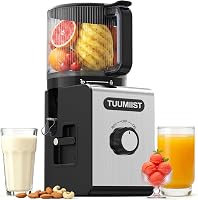
What Is a Masticating Juicer Machine?
A masticating juicer machine crushes and squeezes produce slowly instead of shredding it at high speed. A single auger turns at low RPM inside a screen, pressing juice out while the pulp moves to a separate container. The slow pace keeps heat and foam down, so the juice holds up longer in the fridge.
On this page (7 sections)
- How does a masticating juicer machine work?
- Why is slow speed the defining feature?
- Is "masticating" the same as "cold press" or "slow juicer"?
- What can a masticating juicer machine juice?
- How much prep and feeding does it need?
- How do you clean a masticating juicer machine?
- Is a masticating juicer machine worth it for you?
A masticating juicer machine crushes and squeezes produce slowly instead of shredding it at high speed. A single auger turns at low RPM inside a screen, pressing juice out while the pulp moves to a separate container.
The slow pace keeps heat and foam down, so the juice holds up longer in the fridge.
That slow action is the whole point of the design. It also changes how much prep you do, how you feed the machine, and how long cleanup takes afterward.
This guide covers each of those in plain terms.
How does a masticating juicer machine work?
A motor turns a single auger at low speed, and the auger crushes produce against a fine screen. Juice passes through the screen into one container while the pulp is pushed out into another.
Nothing is spun at high speed and nothing is chopped by a blade.
The auger acts more like a slow press than a blender. It grinds the produce into small pieces, then squeezes them as the material moves down the chamber.
The screen is the gatekeeper: liquid goes through it, and dry pulp exits at the end.
Because the auger runs slowly, the produce spends more time under pressure. That longer, gentler squeeze is what people mean when they call these machines cold press juicers.
The Hurom H330 runs its auger at 50 RPM. That's the number to look for when you compare models, since slow is the defining trait of the category.
Why is slow speed the defining feature?
Low RPM means less heat, less foam and less air mixed into the juice. Heat and oxygen are the two things that speed up browning and flavor loss in fresh juice.
A fast spinning blade adds both.
A centrifugal juicer shreds produce with a spinning disc and flings the juice through a strainer. That's fast, but the process whips air into the liquid.
A masticating juicer machine trades speed for a cleaner press.
The practical result is juice that looks clearer and tastes brighter. Hurom says its slow squeeze leaves up to 65% more vitamins than a centrifugal juicer and keeps juice fresh up to 72 hours in the fridge.
Treat those numbers as the brand's own claims, not lab results you can check at home. The general idea still holds: gentle pressing is easier on nutrients than high-speed shredding.
Is "masticating" the same as "cold press" or "slow juicer"?
In shopping terms, yes. Masticating, cold press, slow and triturating all describe the same low-speed auger design.
You'll see the labels used almost interchangeably across product pages.
The word "masticating" comes from the idea of chewing. The auger grinds produce the way teeth would, rather than slicing it.
That's a useful mental picture, and it's why the category is sometimes called a chewing juicer.
Brands do stretch the words. A few machines labeled cold press run a twin-gear system rather than a single auger.
Both are slow, but they behave differently in use. Before you buy, check that the model lists a single auger and a low RPM if you specifically want the masticating type.
If you're weighing a specific model, our guide on is the Nama J2 a masticating juicer walks through how one popular machine fits the definition.
What can a masticating juicer machine juice?
Fruit, vegetables, leafy greens and, on many models, nuts for milk and frozen fruit for sorbet. The slow press handles fibrous produce that clogs faster machines.
Root vegetables like carrots and beets come out well because the auger grinds through the fiber. Leafy greens such as kale and spinach press into a thick juice.
Softer items like citrus and watermelon also work, though they produce more liquid volume per piece.
Multi-purpose models go further. The Aeitto 3-in-1 lists juice, nut milk and sorbet as its three modes.
Nuts need soaking first (8 to 12 hours according to Aeitto), and frozen fruit should thaw for 5 to 10 minutes before sorbet. Those are real prep steps to plan for, not instant switches.
How much prep and feeding does it need?
Prep depends on the feed chute size, and feeding is usually hands-free on newer models. A wide chute lets you skip most chopping.
A narrow one means cutting produce down first.
Feed chute size is the spec that decides how much knife work you do. The Aeitto has a 6.0-inch chute that takes whole apples, oranges and celery.
The Hurom H330 uses a 2-liter hopper that takes whole produce too, and it self-feeds once loaded. Add the produce, press start and walk away.
Older or simpler slow juicers use a small chute and need produce cut into thin strips. That adds minutes to every batch.
If prep time is your main worry, sort models by chute size before anything else.
Who should choose the Hurom H330?
Choose the Hurom H330 if you want a self-feeding slow juicer that handles whole produce in family-size batches. Its 2-liter hopper takes whole apples, carrots and celery with no pre-cutting, and the quiet motor is rated for early-morning use.
Hurom includes a fine strainer for low-pulp juice and a coarse one for a fuller texture. The company backs it with a 15-year warranty and makes it in Korea from BPA-free Tritan and stainless steel.
That warranty is the longest in this group by a wide margin.
Skip it if your counter space is tight. At 18 inches wide and 14.8 pounds, it takes up real room.
Its removable parts are hand wash only, so it isn't the choice for someone who wants everything in the dishwasher.
Who should choose the Aeitto 3-in-1?
Choose the Aeitto 3-in-1 if you want juice, nut milk and sorbet from one machine with the least scrubbing. Its mesh-free chamber skips the screen that usually needs brushing, so assembly and cleanup are quicker.
Aeitto says the multi-layer extraction structure reaches 99% juice yield, which is the brand's figure rather than a tested result. The practical draw is the mesh-free design: there's no screen to scrub, just a straight-through chamber you rinse under the tap.
A brush is included for corners.
Skip it if you mostly juice leafy greens in large amounts. The wide chute and 3-in-1 modes suit mixed recipes better than a greens-only routine.
Who should choose the Hamilton Beach centrifugal juicer?
Choose the Hamilton Beach if you want fast juice and dishwasher-safe parts at a budget price. It's the counterpoint to everything above, and it shows what you give up with a slow press.
The 800-watt motor and 3-inch Big Mouth chute take whole apples and bunches of celery. Its pulp bin, juice bowl, lid and pusher are all dishwasher safe.
For a household that wants juice in seconds and cleanup in the machine, that combination is hard to beat.
The trade-off is the fast spin. Centrifugal juicers whip in more air and heat, so the juice separates sooner and doesn't keep as long.
Pick this one if speed and easy cleanup matter more to you than juice shelf life.
How do you clean a masticating juicer machine?
Take it apart, rinse the auger and screen, and brush the mesh before pulp dries. Slow juicers have more parts than centrifugal models, so cleaning takes a few minutes longer.
The auger, screen, chamber and pulp container all come out. Rinse each under running water right after juicing, before pulp sets.
A small brush reaches the screen holes and the corners of the chamber.
Mesh-free designs skip the screen entirely. The Aeitto chamber rinses straight through, which is why it's the easier of the slow models here to clean.
Dishwasher-safe parts change the job too: the Hamilton Beach puts its removable pieces in the machine, while the Hurom H330 asks for hand washing.
For a full walkthrough, see our guide on how to clean a juicer. If cleanup is your deciding factor, compare the machines in our roundup of the best juicers easy to clean before you choose.
Is a masticating juicer machine worth it for you?
It's worth it if you juice often and care about juice quality and shelf life. It isn't worth it if you want a glass of juice in under a minute and never plan to clean more than two parts.
Go slow if you juice greens, make nut milk, or want juice that still tastes good the next day. The Hurom H330 is the pick for whole-produce batches and long-term ownership, given its 2-liter hopper and 15-year warranty.
The Aeitto 3-in-1 is the pick if you want three modes and the easiest cleanup.
Go fast if speed is the priority. The Hamilton Beach centrifugal model gets juice into the glass quickly and its parts go in the dishwasher.
Compare more slow models in our roundup of the best masticating juicers to see how the field stacks up.
Whichever type you pick, the label matters less than the auger speed and the chute size. Those two numbers tell you how the machine will feel in daily use.
Everything else is detail.
Frequently asked questions
Do masticating juicers really make juice last longer?
Hurom says its slow squeeze keeps juice fresh up to 72 hours in the fridge. The low speed and gentle press limit heat and air exposure, which is why slow-pressed juice often holds its color and flavor longer than centrifugal juice.
Can a masticating juicer handle wheatgrass and leafy greens?
Yes. A slow auger presses greens well, and leafy items like kale and spinach are standard uses.
Feed them in small bunches with a sturdier item such as celery or carrot so the auger has something to grip.
How long does it take to juice a glass of juice in a masticating juicer?
Allow a few minutes per glass. The auger turns slowly, so it takes longer than a centrifugal machine to push the same amount of produce through.
Most of the time saving in a slow juicer comes from skipping the chopping step.
Does a masticating juicer need special cleaning?
It needs more disassembly than a centrifugal model, because the auger, screen and chamber come apart. Mesh-free designs cut the scrubbing.
A brush and running water handle most of it, and the whole job usually takes a few minutes.